This document can be considered as the “baseline canon” for the fictional world of “The Tetrahedron”. Most of the concepts in this world have come to me in dreams over the course of several years. Some aspects, like the shape of the world and the class-structure, are lifted straight from dreams, while others are heavily modified concepts that have been expanded and moulded to fit.
The entire project is under the Creative Commons Attribution-NonCommercial license, meaning you are allowed to do whatever you want with it (but technically you shouldn’t make any money without first checking with me).
You can think of it sort of like the SCP Foundation, or those wacky Backrooms levels that people just keep adding to. You can follow the foundational “canon” that this document will establish and build upon that, or you can pick and choose whatever you like.
You can read more about the license here:
https://creativecommons.org/licenses/by-nc/4.0/deed.en
You can also watch my video about it here:
[LINK TBA]
Okay, let’s go.
Please note:
This document (and world) is subject to change.
Big Picture Stuff
On a super zoomed out level,
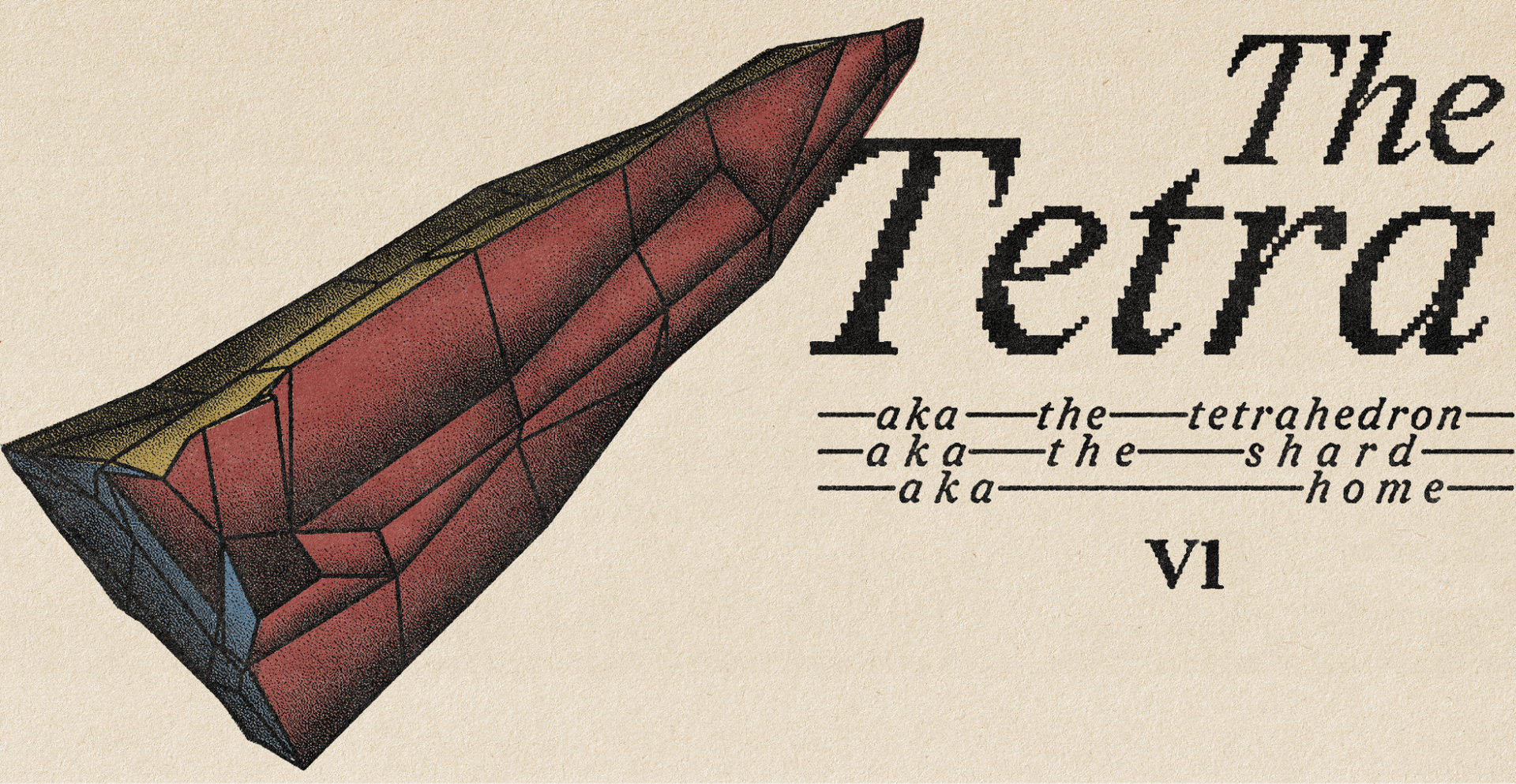
the world (The Tetrahedron, “tetra”, or sometimes “The Shard”) is a triangular pyramid-like piece of rock, presumably splintered off during some planet's unknown violent demise.
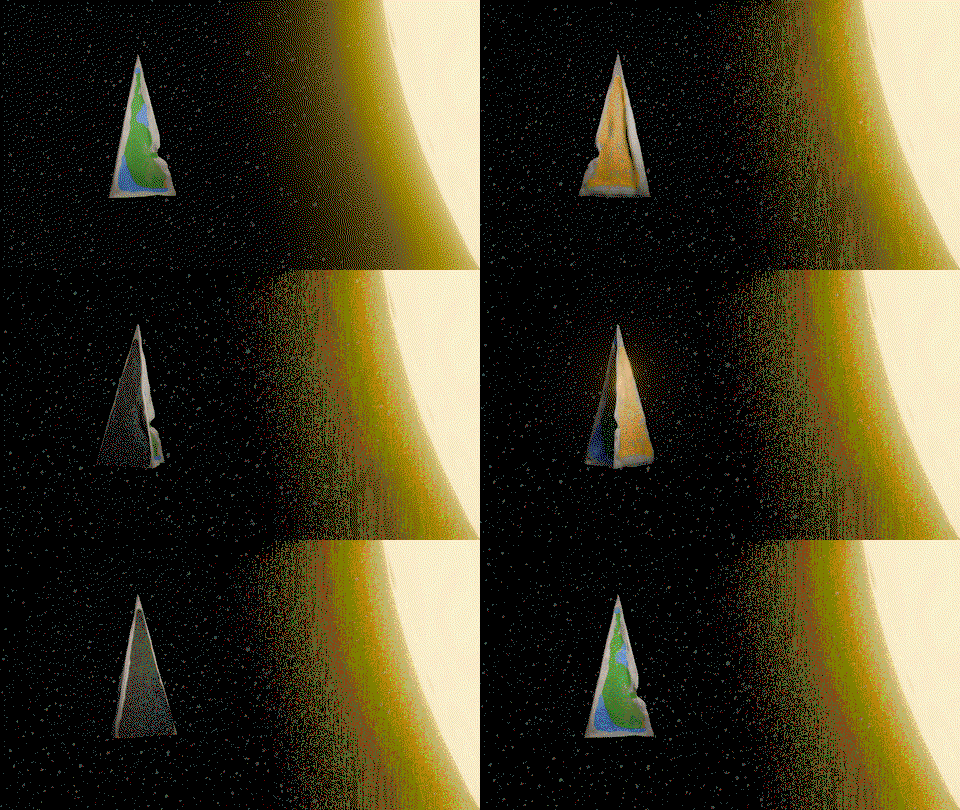
It is currently making its way through space like a rotating arrow, tip first, passing by a sun of unknown size, but large enough, and slow enough to pass, for the entirety of remembered history to have that sun be there.
The Sides
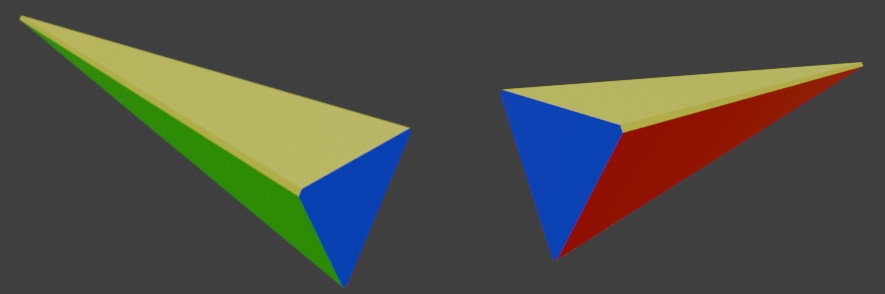
(Throughout this document the sides will be referred to by their actual names rather than the colours as I do in my video. If that gets confusing at any point, you can return to this section for reference.)
Innangaard (yellow): This is where people live and the majority of stories will take place.
Chasma (red): Dead landscape, mostly covered in jagged mountain. Rocky, desert-like, full of Vilhälmite mines. Apart from working miners in VEGAB's temporary housing facilities, no one lives here. Little-to-no access to clean drinking water and other amenities. Used to be called “Perata”, along with present-day Perata, which was the umbrella-term for unexplored/inaccessible land.
Perata (green): Unexplored.
Neder (blue): The “bottom” of the tetra. Not much is known.
An important aspect that does not come through in the basic 3D models and sketches I've whipped up for this document, is that the tetra is obviously not a perfectly geometrical smooth pyramid shaped piece. It’s just as uneven as any ground surface on any regular planet. For example: Innangaard (where everyone lives) is essentially one gigantic valley, meaning it is entirely surrounded by mountains. This limits the population to stay on this side of the tetra. With one exception:
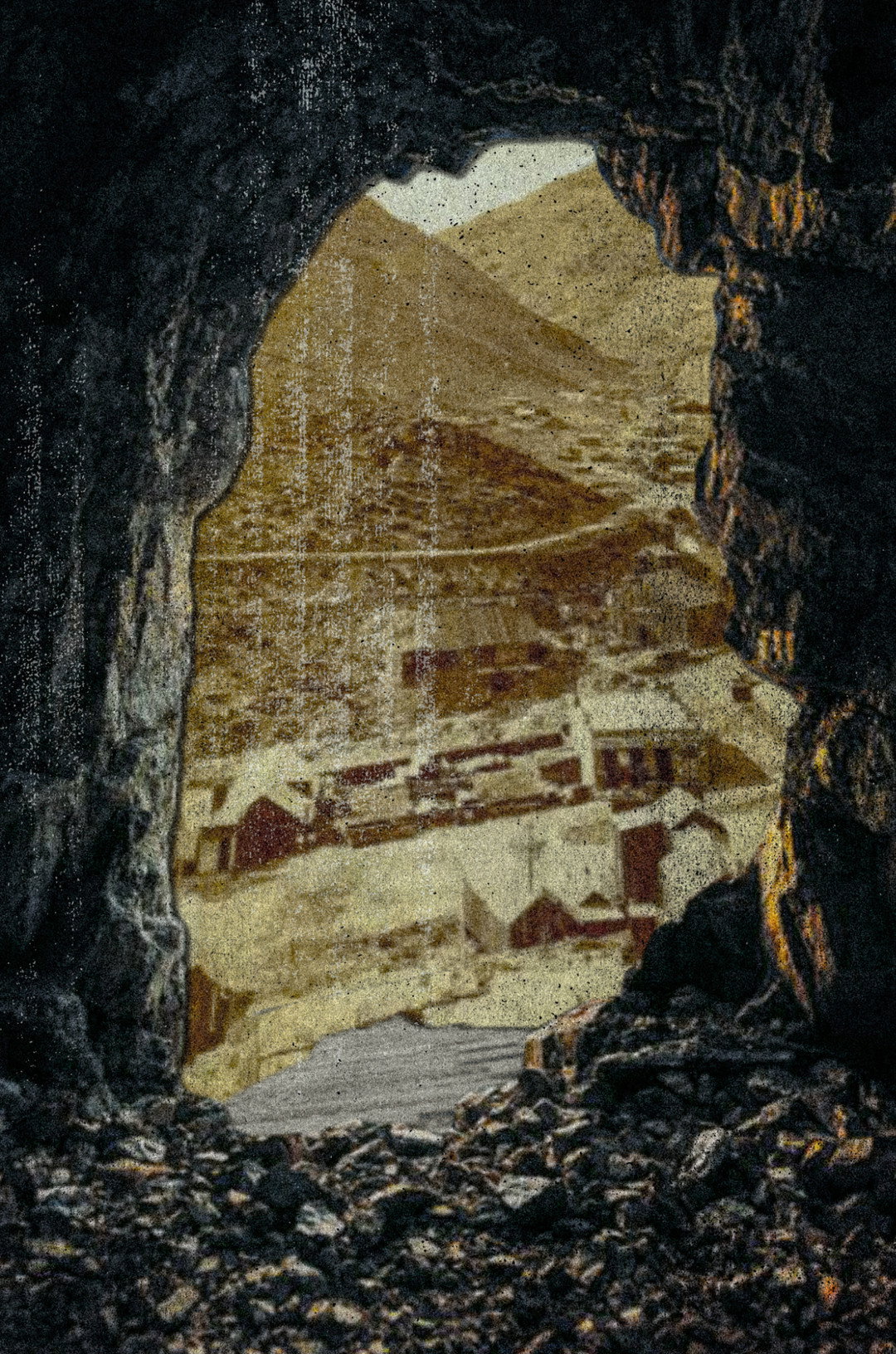
A few hundred years ago, scientists discovered a sort of “geological fluke” (thinner walls, a seam of soft sandstone and an old fault line) in the mountain range between Innangaard and Chasma. A small mining company by the name MEGAB was contracted by the Political Council to begin an excavation project. The work went on for a number of years, until the breakthrough to Chasma finally happened.
This led to the discovery that Chasma was ripe with the ore Vilhälmite. Accessing Chasma made Vilhälmite go from a rarity to commonplace, and the abundance of it ushered in the modern age of technology.
Following the breakthrough, MEGAB went through a rebranding process and became VEGAB (Vilhälmine Extraction Group AB). They are now the most powerful and influential corporation on the Tetra.
VEGAB coined the term "Vilhälmine" for the mines on Chasma. Technically, these mines are on public ground, owned by the state, but for all intents and purposes they belong to VEGAB. Since the breakthrough, no other mining company has managed to start mining there without being bought out by VEGAB or being made to disappear in other ways. In other words, VEGAB has a monopoly on Vilhälmite (the stuff that powers literally everything).
Mining is by far the largest industry on the Tetra. Working class miners are sent to Chasma for months at a time for work, before going back home for a month or two. Think oil-rig.
Workers on Chasma are not employees, but contractors: fewer rights, lighter regulations, and endless replaceability.


Vilhälmite
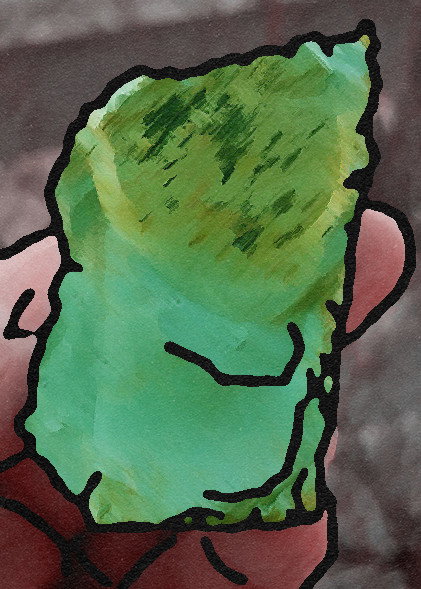
The main ore being collected on Chasma is Vilhälmite, which is essentially used to power everything and anything on the Tetra. It powers technology and the electrical grid, serves as the baseline for fuel, and a lot more.
Without it, society as it is would not function.
(for narrative purposes: consider Vilhälmite sort of like a super charged battery, steam engine, perpetual motion machine and superpositioned particle all in one)
For a good while now, Vilhälmite supplies have been running low, and to make a long story short, one could say that society is right now in the very early stages of a great depression. Everyone is aware of the fact that if the Smart Scientist People don't figure something out for how to make it to Perata, humanity as they know it will go extinct (or at least enter sort of medieval times) within the next 20-60 years.
Vilhälmite has also been proven to have some level of radiation emitting from it at all times, meaning that working with the ore is considered a health hazard. The radiation levels have not been measured as strong enough for VEGAB to supply the workers with protective gear or take other measures for guaranteeing their safety. It is unlikely that this will happen.
It should also be noted that due to the low levels of radiation, no one can quite explain some of the more peculiar and deadly ailments allegedly afflicting workers. Until these effects can be measured and scientifically proven, VEGAB maintains plausible deniability, despite the visible toll the mines take on many workers.
This has left VEGAB with a growing image problem. The company has spent a minor fortune on marketing in an attempt to win back public goodwill. A designer head office in Mölstadt, scholarship funds for miners’ kids, and nuclear family-oriented poster campaigns along the lines of “what’s vilhälmine is vilhämours”. This has not been very effective.
The Seasons
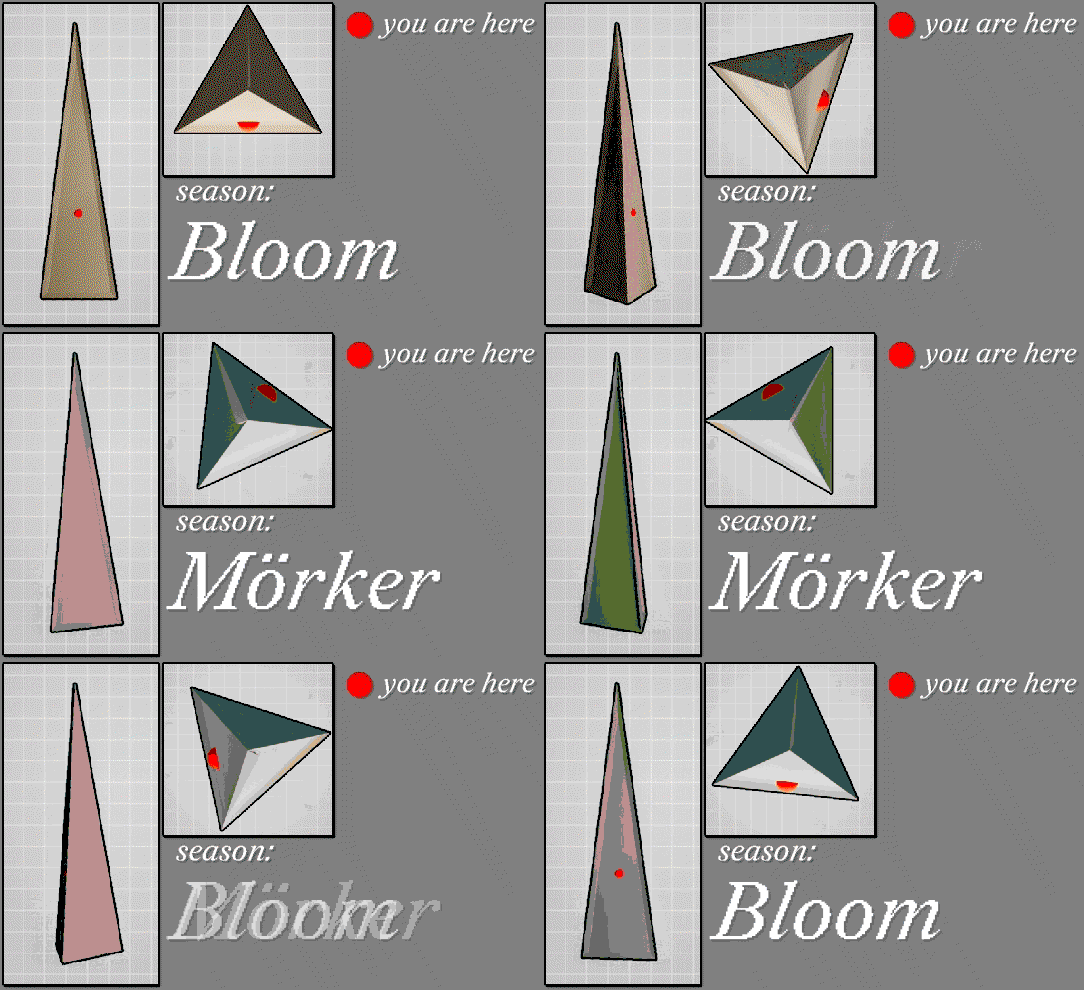
Seasons are divided into two “major” seasons
(equivalent to “Summer” and “Winter”):
the Bloom and the Mörker. The Bloom lasts for ⅓ of a tetra-year, and the Mörker lasts for ⅔ and is therefore twice as long as the Bloom. 1 Tetra year is the equivalent of 3 Earth years.
Cheat Sheet:
365 days of sun
Followed by
730 (365x2) days of darkness
= 1 Tetra Year
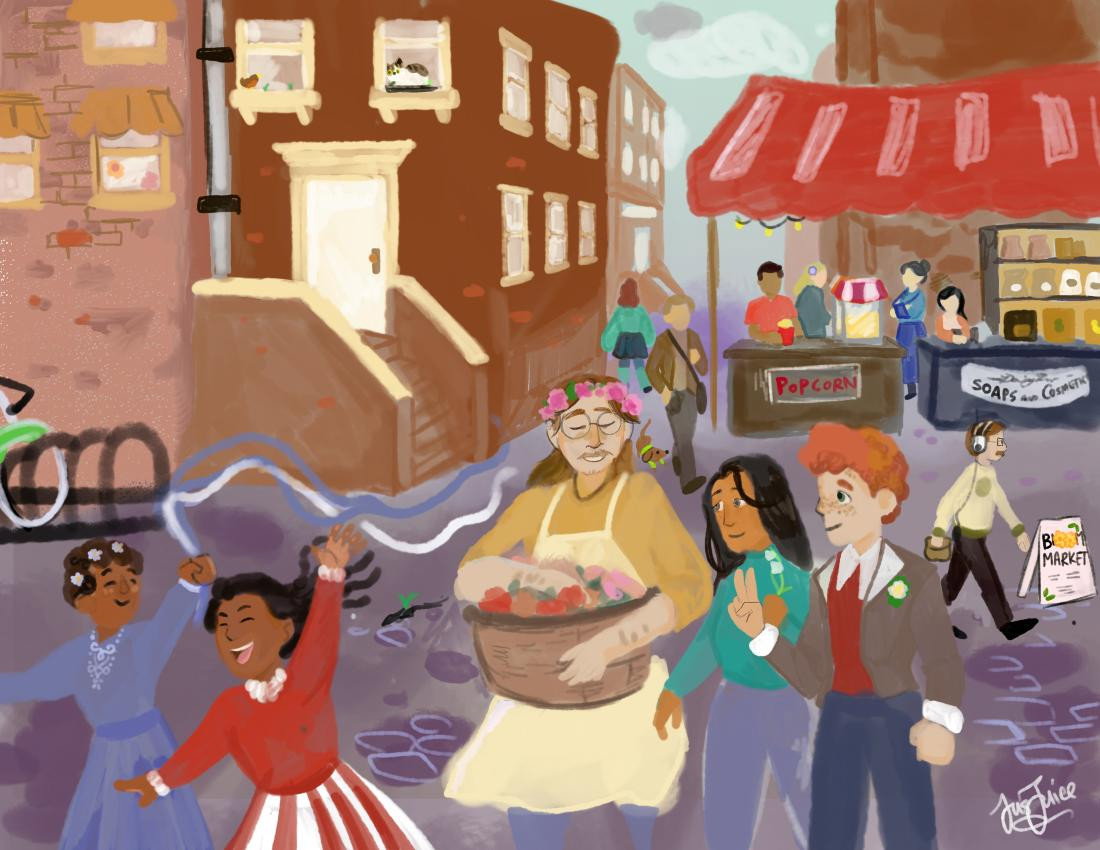
The one season where the sun shines. There are no “nights”, as in: it never gets dark during the Bloom. Thanks to industrial smog and storm clouds, there can be small windows where the sun is blotted out for brief moments of respite from the neverending heat, but this isn’t an everyday occurrence.
Culturally the Bloom is associated with happiness, considered “the good times”, spoken of with joy and longing.
Practically it brings a lot of issues, both for the population’s mental and physical health (heat stroke, disrupted sleep rhythms, tendencies to go on week-long benders, myriads of other issues), but also in terms of practical aspects and threats (forest fires, droughts, heat waves, etc etc). Sleep masks and blackout curtains are a must.
Bloom
Mörker
The long season of no light. There are no “days”, as in: it’s always dark. The start and end of each day is marked with the mechanical clunk of the electrically powered lights around the city turning on/off.
Lights run on huge, loud, mechanical generators that can be found a few miles outside the cities. These are powered by Vilhälmite.
If one were to venture further outside of major cities, main roads will be lit by spaced out “spotlight”-style light posts, and countryside homes might have lights in their yard, on their house etc, otherwise it’s dark. Everywhere.
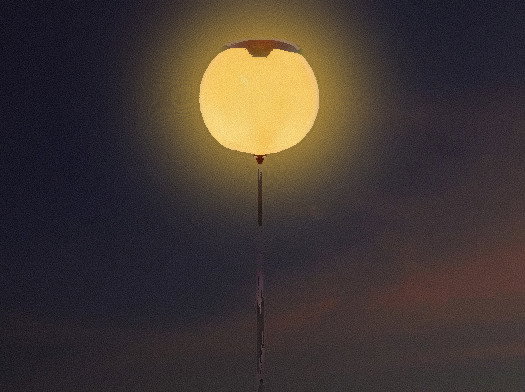
Culturally, Mörker is considered a time to hunker down with work, to spend time with family, prepare for the next Bloom, to simply “survive”.
Climate wise, it very rarely snows or goes below freezing. It’s closer to a cool autumn evening. Only a lot darker.
(note: snow does exist on the Tetra, but mostly up on the mountains)
Holidays/celebrations/seasonal events:
Sigurdag Fest
Start of Bloom/end of Mörker
There are 4 main seasonal events.
At the start of Bloom, the middle of Bloom, start of Mörker, middle of Mörker.
The biggest celebration of the year. Huge festivals are thrown in the cultural capitals to celebrate the return of the Bloom.
Jaanisol
Middle of bloom
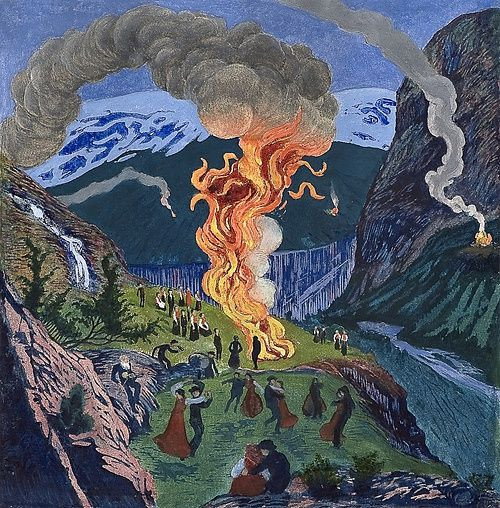
Used to be celebrated by lighting bonfires. This has fallen out of style due to more modern sensibilities in regards to wildfires and other safety concerns. Now mostly celebrated by teens and alcoholics as an excuse to get drunk. For most, a simple “Happy Jaanisol” to a family member, friend or neighbour is as far as celebrations go.
Samhain Nacht
End of Bloom/start of Mörker
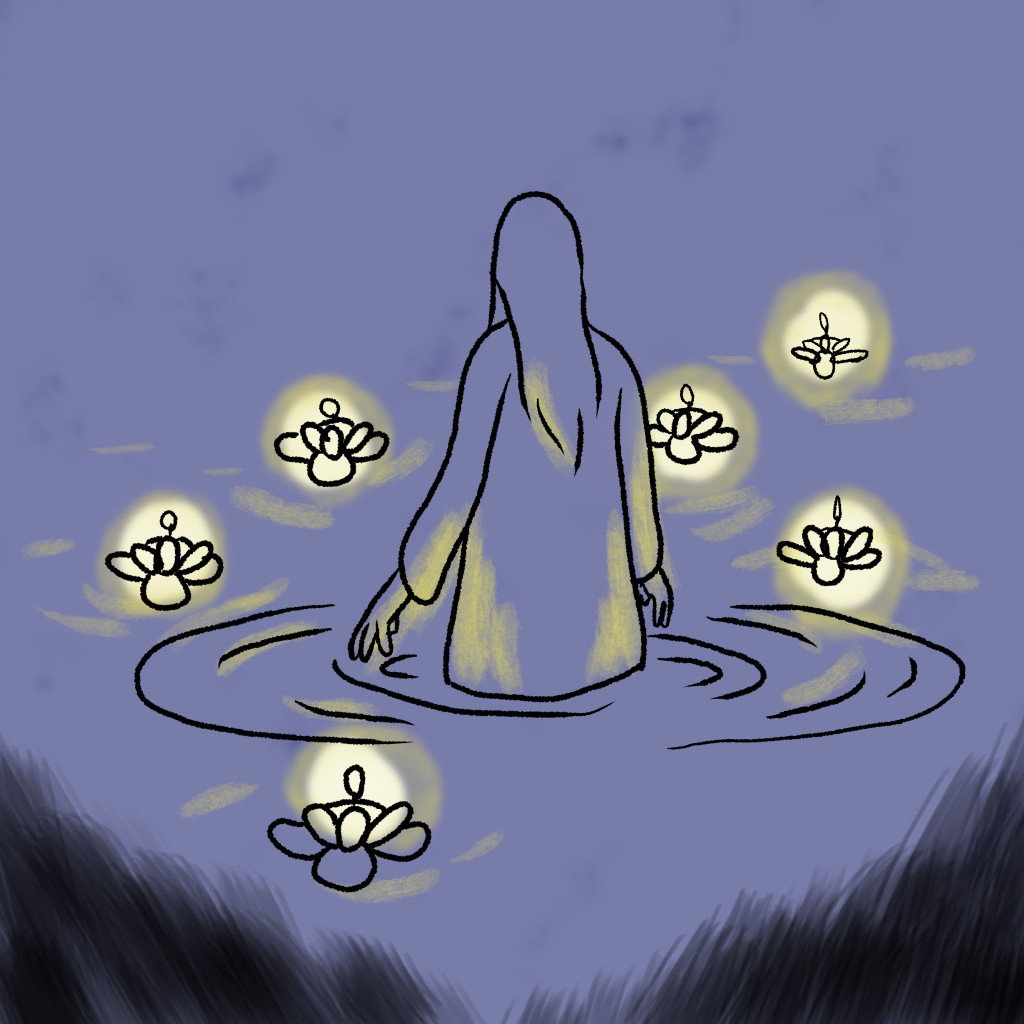
More solemn, candles are lit and sent out in paper lanterns on bodies of water. Meant to bring good luck for the incoming Mörker season.
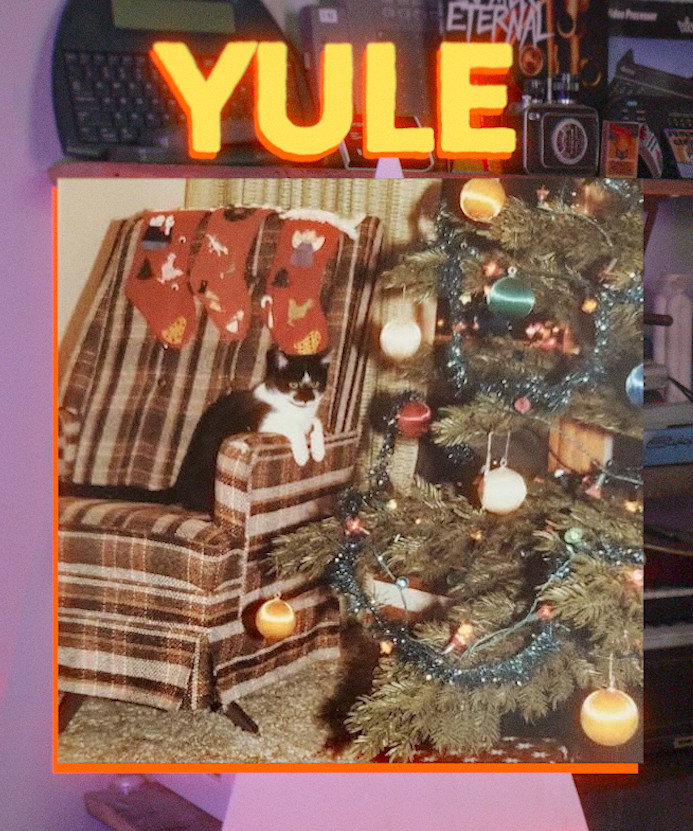
Yuule
Middle of Mörker
Celebrated by giving each other gifts. Often either items for passing the time during Mörker, or something in preparation for Bloom.
Class society
The tetra acts functionally as one large country, divided into regions. Although Innangaard is roughly the size of the earth, it has no borders and no countries as such. This does not make the Tetra a utopia. Your social standing is heavily defined by socio-economic class rather than nationality.
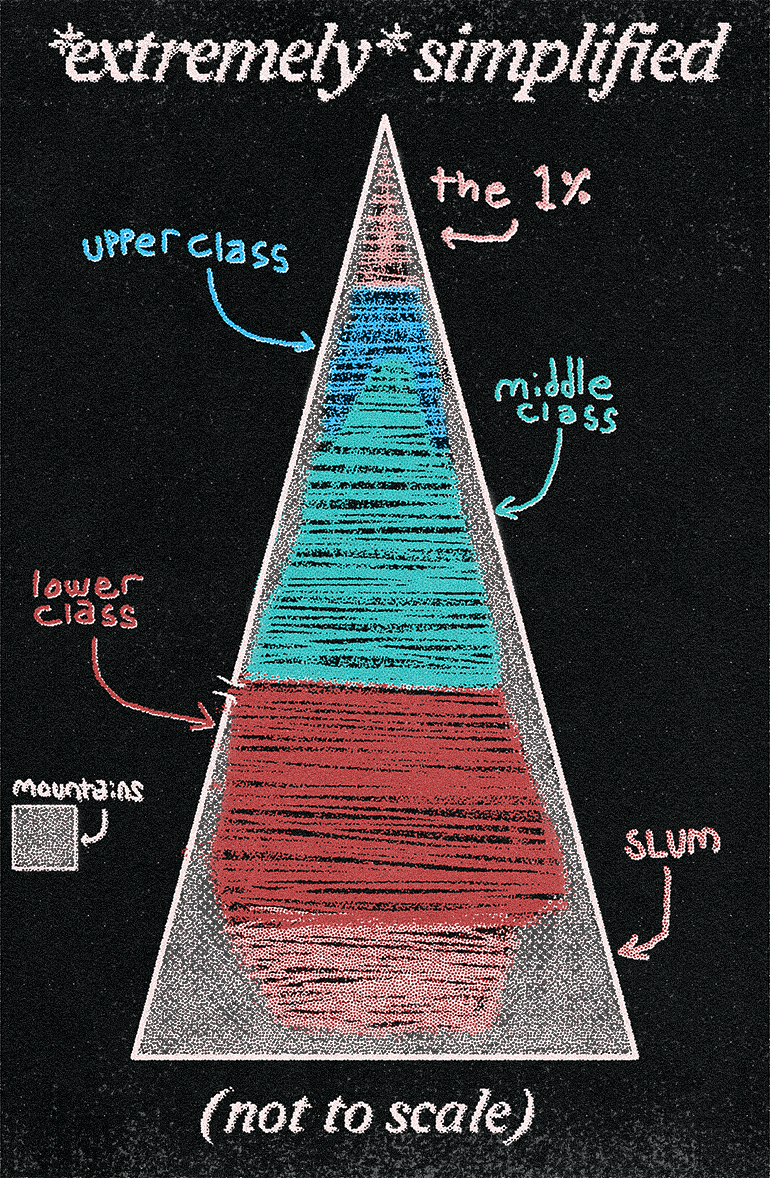
The extremely simplified version, again seen in the illustration, is that the further toward the top of the pyramid you get, the more wealth you will encounter. The dividing lines are not razor sharp, there are exceptions to the rules, and reality is rarely so black and white (even in this somewhat cartoony universe), but that’s the general idea of the class divide.
While many of the specifics in terms of regions, cities, landmasses etc are still up in the air, here are a couple of notable landmarks and their approximate positions:
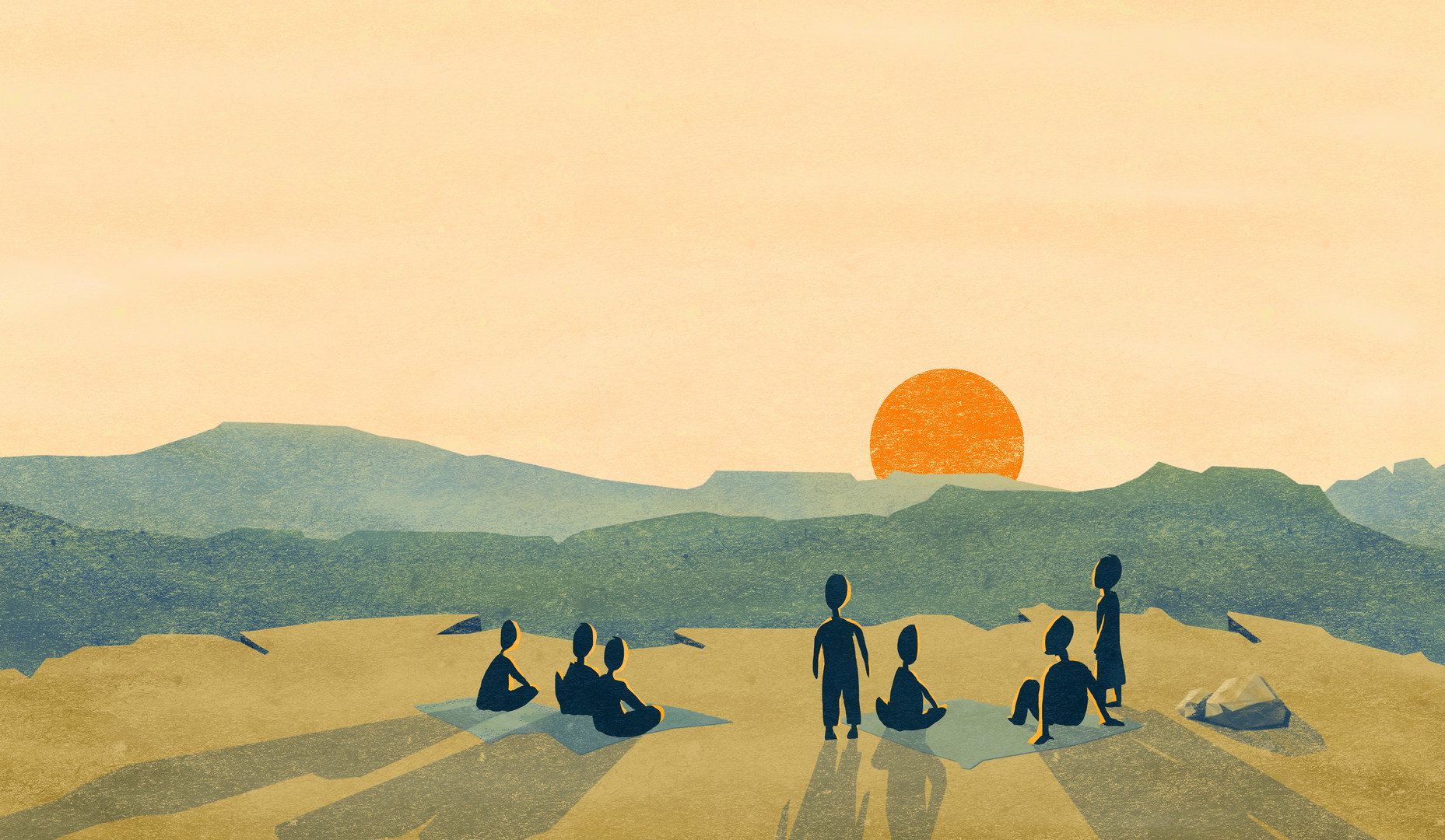
Note: this shitty illustration I whipped up is not a map. Specific land masses and bodies of water etc have not been mapped out as of right now (V1).
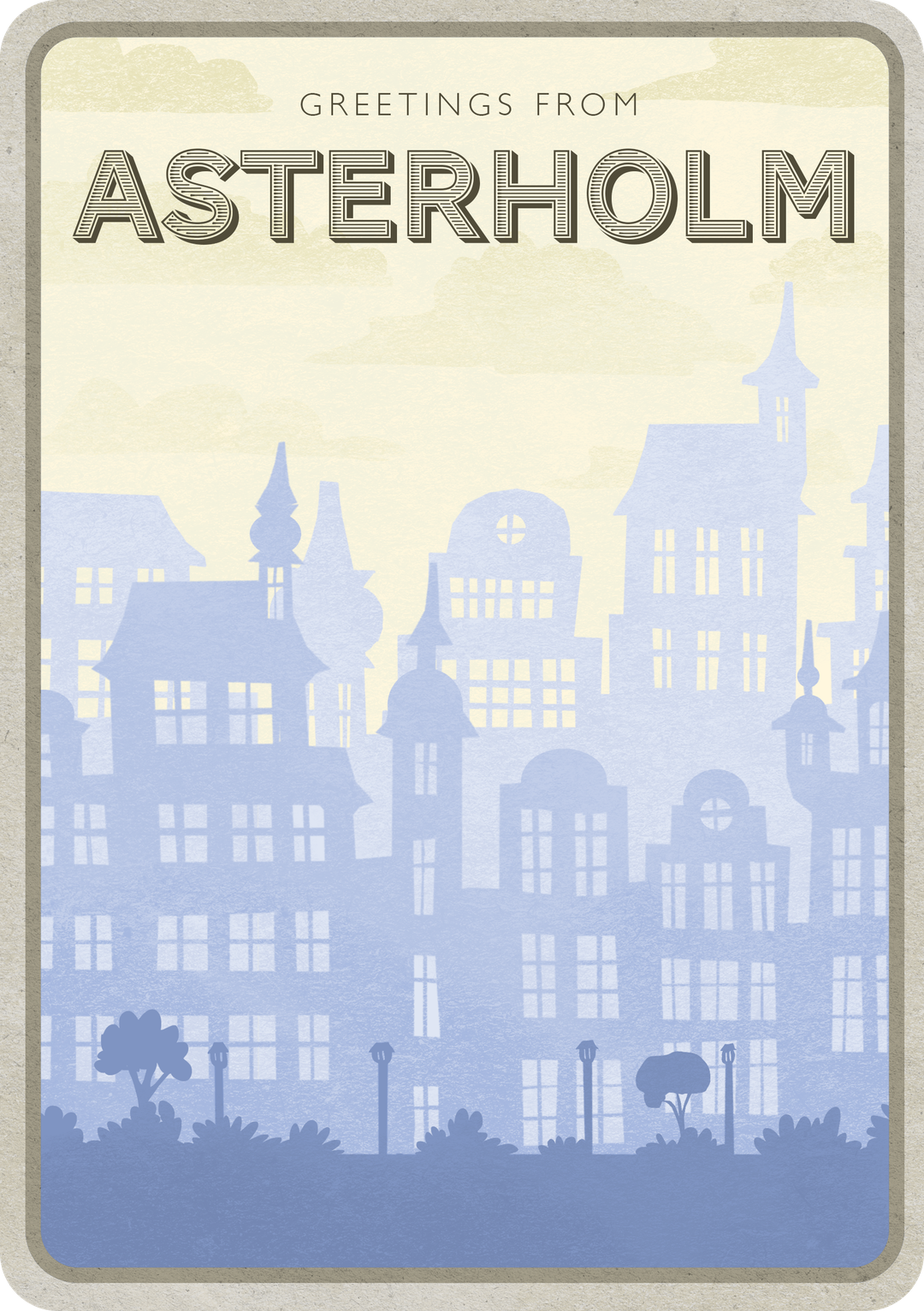
Somewhere below the 1%, in the top third of the Tetra, lies the capital: Asterholm. Clean, wealthy and home to the Political Council.
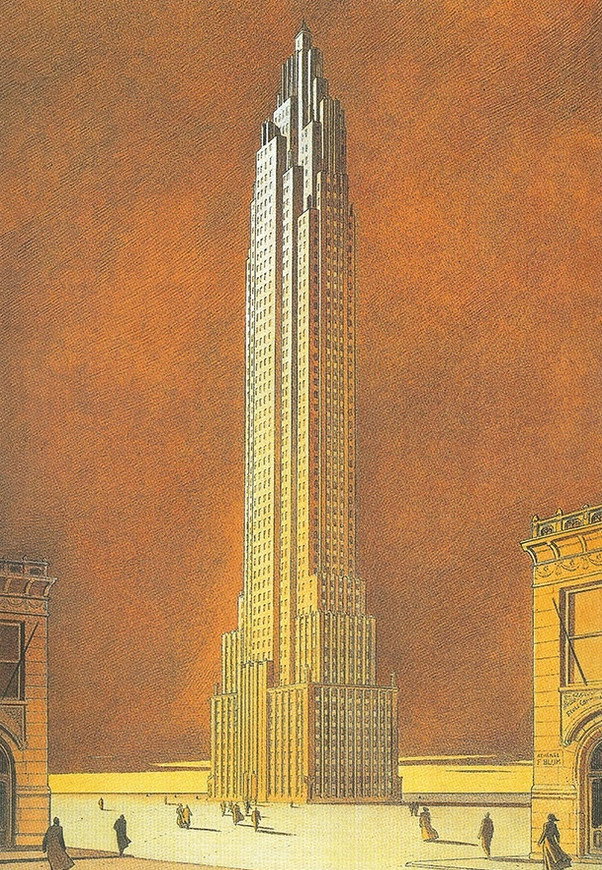
The very top of the pyramid is home to the 1%. Essentially a gated community, recognisable from the tall, futuristic tower visible at its centre, which can be seen from miles away.
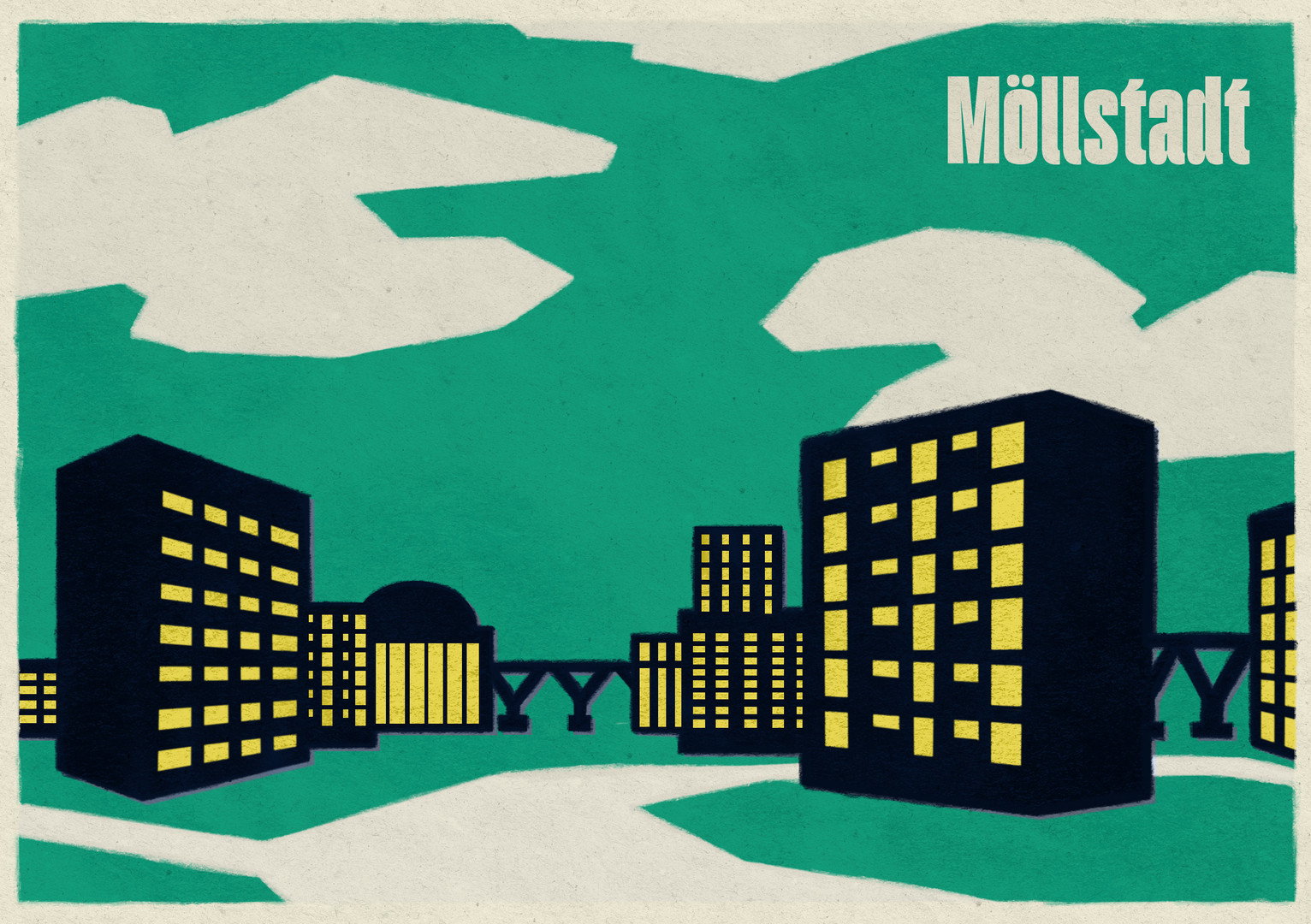
Around the middle of the Tetra is Mölstadt. This is the largest city on the Tetra and is often considered as the unofficial “cultural capital”, with everything from suburbs and nightlife to a large homeless population.
Further down, the bottom third ranges from middle class to lower working class, with the slums at the very bottom.
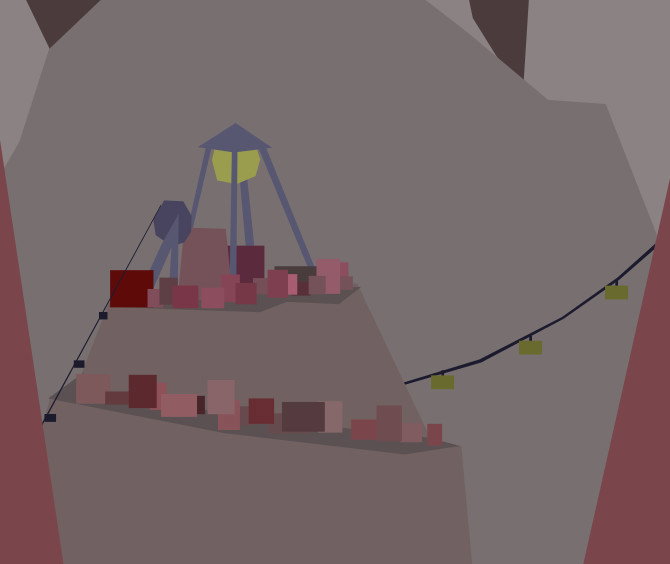
Somewhere in the mountains towards Chasma is Fjellvik. A small town in the mountains, known as the “furthest establishment”: the last outpost before the terrain becomes too unforgiving to live in. VEGAB of course wanted the land beneath Fjellvik, and tried to acquire it. This had worked with many other such towns, but not this one. The residents refused to leave. With no legal way to force them, VEGAB proceeded to excavate everything around the town with the hopes that this would force the move. This was also fruitless, and Fjellvik (with its residents) now sits atop a tower of rock (or "spire") in the middle of a mine, only accessible by cable car.
Political Council

There is no president or prime minister of the Tetra. The highest political instance is the Political Council, 15-25 suits in a grey building in Asterholm. They were probably voted in at some point, and there have been whispers of an upcoming “election season”. But as things stand, there is no known method for the public to influence what they decide. Prominent VEGAB shareholders are known to have seats on the council.
Please note:
any image with this stamp is NOT covered by the licensing of this document. i.e dont use it, its likely copyrighted.
->
Religion and beliefs
There is one single core belief system:

Forn - "ancient" / "former"
Fem - "Five"
This core belief has then been interpreted differently, resulting in multiple denominations/variations of the religion. The specifics of “how to be a good believer” will differ largely between different areas, families, denominations.
There is no god at the core of this belief. Instead, it surrounds 5 saints, each of which has a connected principle:
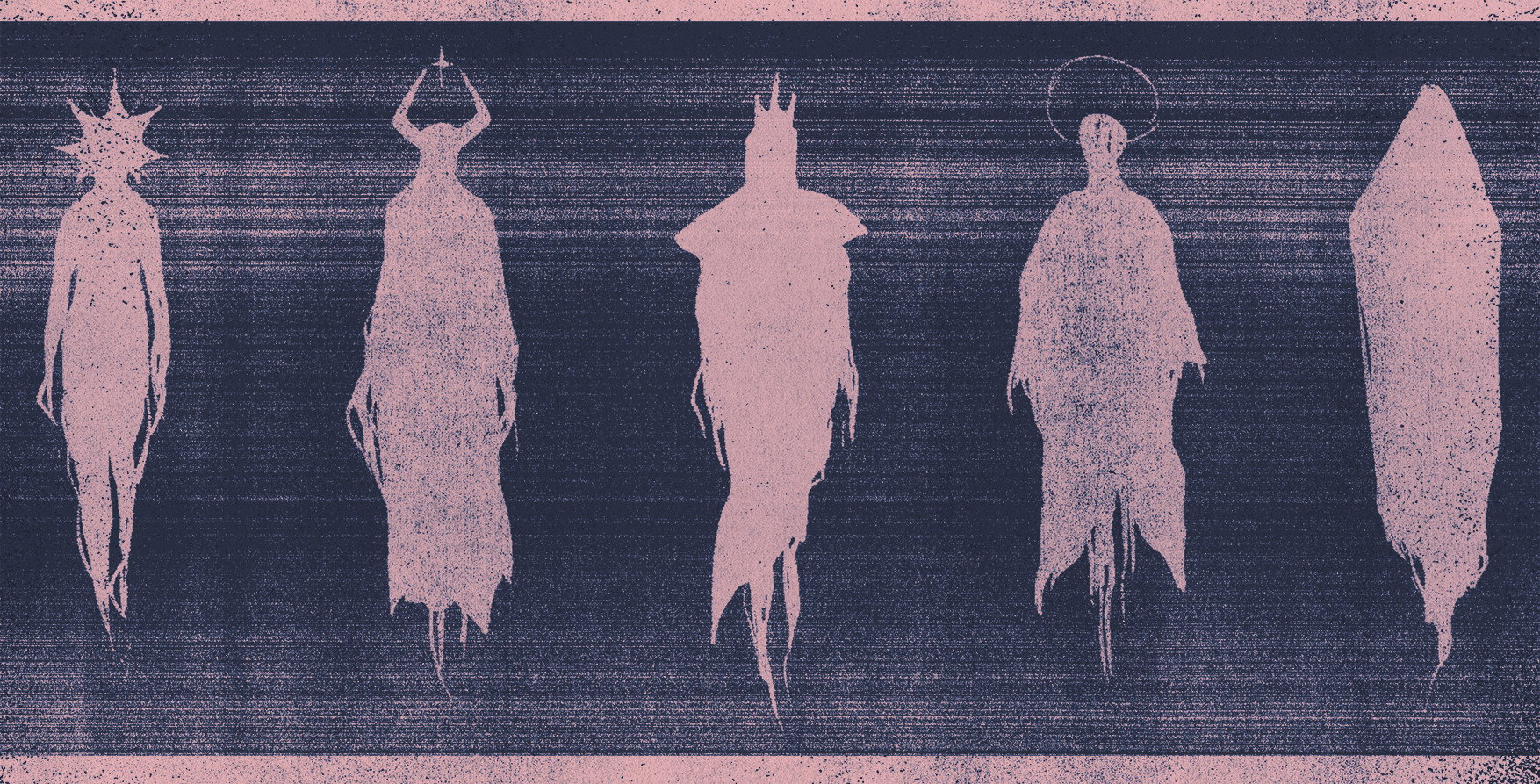
Milena of Love, Phobos of Truth, Vlad of Power, Valeda of Väägi, and The Fifth.
Milena
Of Love

Represents kindness, tenderness, acceptance and love for the people that are close to you, and the people who are not. Sort of like a traditional Christian old lady with rosy cheeks, who might also be homophobic.

Phobos
Of Truth
Represents honesty, knowledge, clarity, intelligence, resourcefulness. Sort of the opposite of Milena.

Vlad
Of Power
Represents the strive for greatness, success, riches etc. Very materialistic type vibe. Anyone who happily calls themselves an “entrepreneur” will likely be of this principle. They are also probably fascist.


Valeda
Of Väägi
We'll touch on Väägi in a bit, but Valeda essentially represents mysticism, a connection with something beyond the veil. It is not very common to meet a person of this principle (probably about as prevalent as meeting triplets on earth), but when you do they’ll either be one of the most interesting, or most intolerable, people you’ve ever met.
The Fifth
Of ????
According to some, The Fifth saint has still not lived. Others will counter that with “then why is the entire religion based on 5 saints and not just 4?”. Others yet will tell you that The Fifth saint was actually [famous historical person], and they represented the principle of [whatever fits their agenda]. But there is no general agreed upon answer to who The Fifth is. Some denominations refuse to acknowledge their existence as a whole.
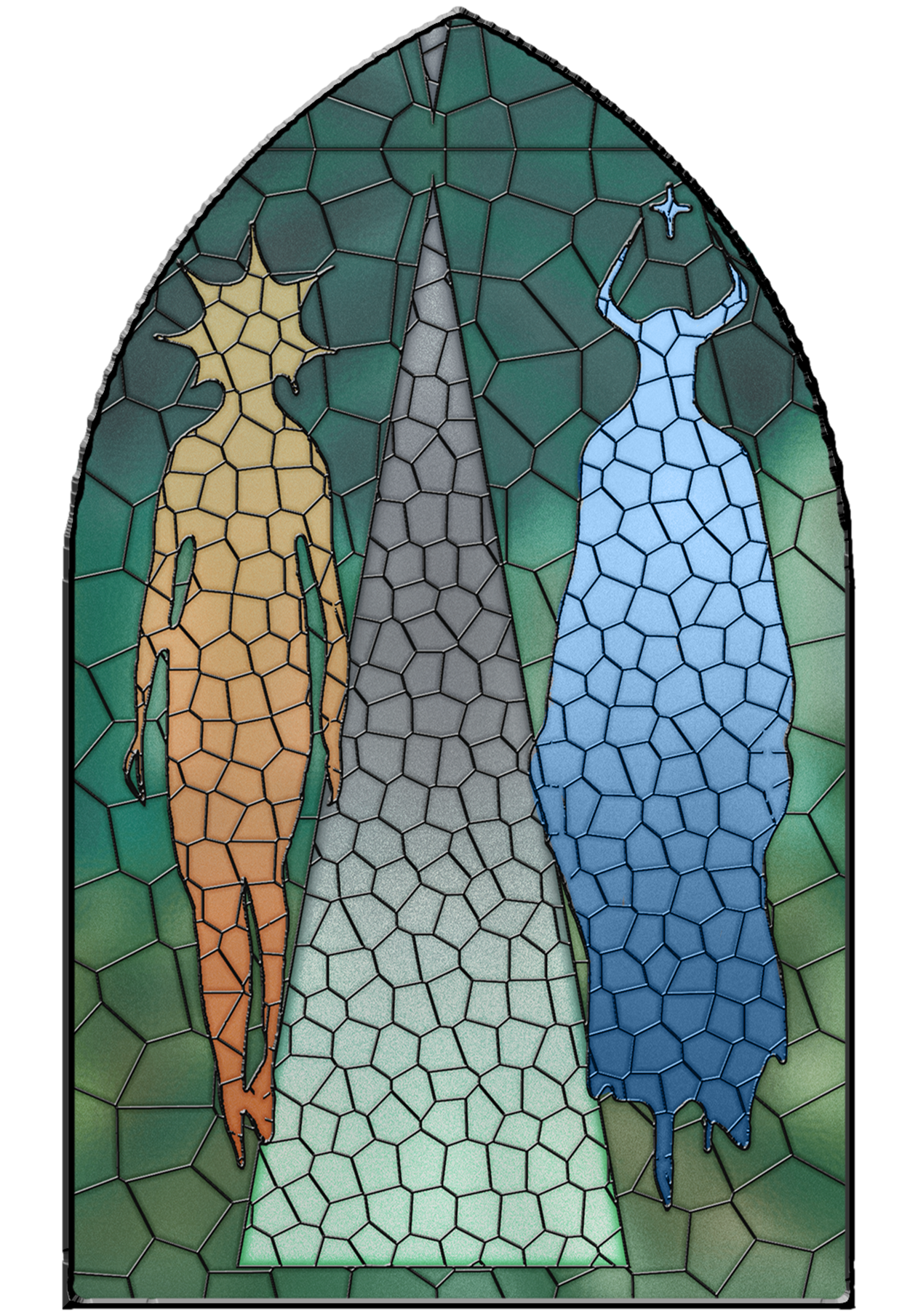
Scriptures exist for all other saints, along with stained glass windows, museum gift shop necklaces and the like, but nothing for The Fifth. Their existence always has been, and continues to be, a source of great debate.
Personal Saints
Everyone on the tetra is “assigned” a saint at some point within their first 5 years of life. Basically, your parents, teachers, friends, etc will assign you the one that fits your personal disposition. Some are assigned their saint as early as a few days old, but generally it’s somewhere around age 3. If you’re from the slums, and your parents never gave much of a shit about you, maybe you assigned yourself a saint when you were old enough to realize that you're the only kid in class without one. Maybe you’re a rebellious teenager in an anti-establishment art collective who's sworn off ever having one (deny it all you want, you’re probably a Vlad or a Phobos).
People will often introduce themselves with their first name and saint (e.g. “Corine of Valeda”).
It works much like a star sign, but based on disposition rather than birth month, and considered to hold much more importance than star signs on earth.
Whether or not there’s any objective “truth” to who gets assigned which saint is unknown. But if there is, the implication becomes that there must be people whose saint should be The Fifth.
Väägi
Väägi is, essentially, magic. A sort of energy stored in, accessed by, or originating from, certain people. Maybe 20% of the population. It’s possible that it’s a lot more, or a lot less, as there are currently no known tests to confirm a person's grasp of Väägi (with the exception of the provable capabilities of Välders).
It’s proposed by some to be a byproduct of Vilhälmite radiation, but this has never been conclusively proven. This hypothesis is largely based on the fact that, anecdotally, presence of Väägi is seemingly more prevalently encountered in the lower classes of the society, much to the dismay of the bourgeois.
In practice, Väägi takes the shape of very minor interactions/reactions. A husband who always knows where his wife's glasses are when she asks. “I swear that’s your Väägi” she says. Perhaps you’ve at some point absentmindedly reached for your cup of coffee, and only after grabbing it and holding it in your hand do you remember that you actually left it in the other room.
Or did you? Maybe your mind is just playing tricks on you. Perhaps it is Väägi. But probably not.
…Unless?
The only reason Väägi has been widely accepted as something real are the rare few that are born with a slightly stronger connection to it/amount of it/control of it/however it works. These are people who can provably commit acts of Väägi, on a larger scale than others, reliably and on command. These people are referred to as Välders (Väägi-Wielders).
Välders are rare to the point where most Välders end up as local or even national celebrities. It is widely believed that all five saints were Välders.
Their acts of Väägi are still nothing close to flying, lifting a train or setting things on fire with their minds. But maybe opening a locked door, briefly communicating with an animal, or receiving so-called Välder-Visions.
Perata
As far as we know, no one has ever managed to reach Perata. This is due to the fact that the mountains one would have to get over to pass to the other side are simply insurmountable. The same goes for the mountains between Chasma and Perata, which are, if anything, even harder to cross. Hundreds of years ago, expedition after expedition would venture out to explore. Rarely would anyone return, and the few who did would bear stories of frostbite, confusion, cave ins and even cannibalism.
(basically: imagine people with 1700s equipment and knowledge of science trying to summit a mountain much higher than Mount Everest)
This eventually led the Political Council to issue a worldwide ban of all attempts to pass the mountains. Recently however, there is discussion on lifting this ban due to the Current State Of The World.
Neder
The elephant in the room. Equally as hard to get to as Perata, except that the sun also never reaches here. No one knows what’s down there, most don't really care. Folk tales say that The Fifth hides down there.
The Current State Of The World
In this section I will try to summarize the current state of the world (as the title implies) and how it got this way.
The Ore Situation Is Crazy
As previously mentioned, Vilhälmite supplies are running low. For the last couple of hundred years or so, smart (or “alarmist”) individuals have been noting that the one resource that every single societally vital infrastructure relies on, Vilhälmite, is not an endless resource. This has of course been largely ignored.
That is up until the last 20 or so years, when it’s started to become apparent that supplies are actually starting to run low. By now, VEGAB has probed pretty much all of Chasma, and the writing is on the wall: there's not much left.
The hope now is, of course, that we can somehow make it to Perata, and that it will contain as much Vilhälmite as Chasma did.

Technology
This impending energy crisis has led to a huge boom in Weird Science and New Technology. There’s seemingly a new team of researchers, or a new duo of suit-wearing 20 year olds with a startup, every week, all promising that they will be the ones to solve the Vilhälmite-shortage.
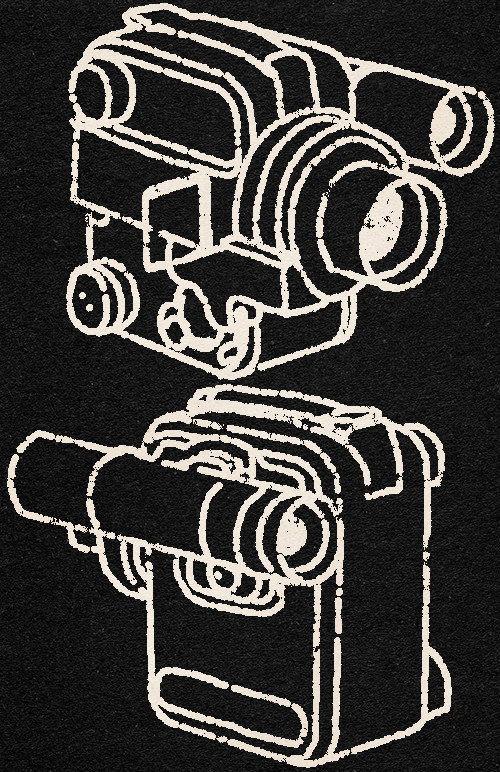
Everything from proposing new sources of energy to replace Vilhälmite, revolutionary machinery to safely traverse the mountains between us and Perata, to… strange gadgets and concept technology being peddled to the public for dubious reasons (how a new videographic camera will solve the energy crisis is anyone's guess, but the Memetix CassetteCorder sold like hotcakes last Yule season).
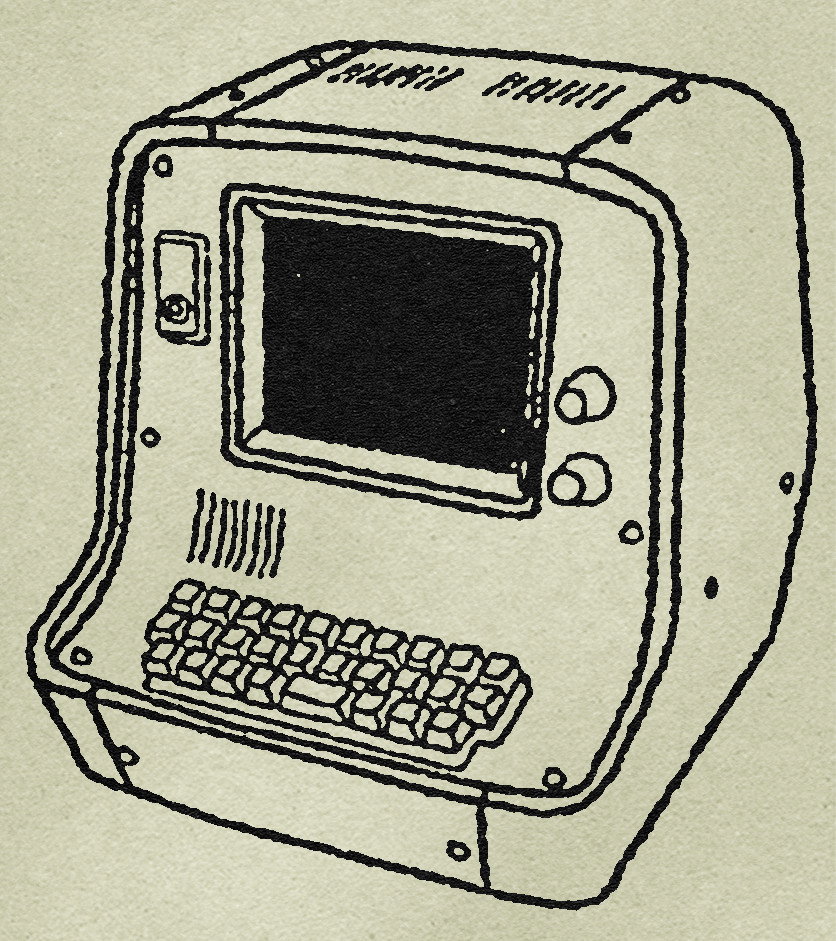
There are no cellphones and no laptops in this world. There are very archaic terminal computers (mostly found in factories and offices), telephone lines (connected through switchboard operators) and analog TV (1.19:1, 18fps).
There is one national TV channel, TTV (Tetra TeleVision), broadcasting from Asterholm to all of the Tetra. Everything else is local public access. This limits the spread of information.
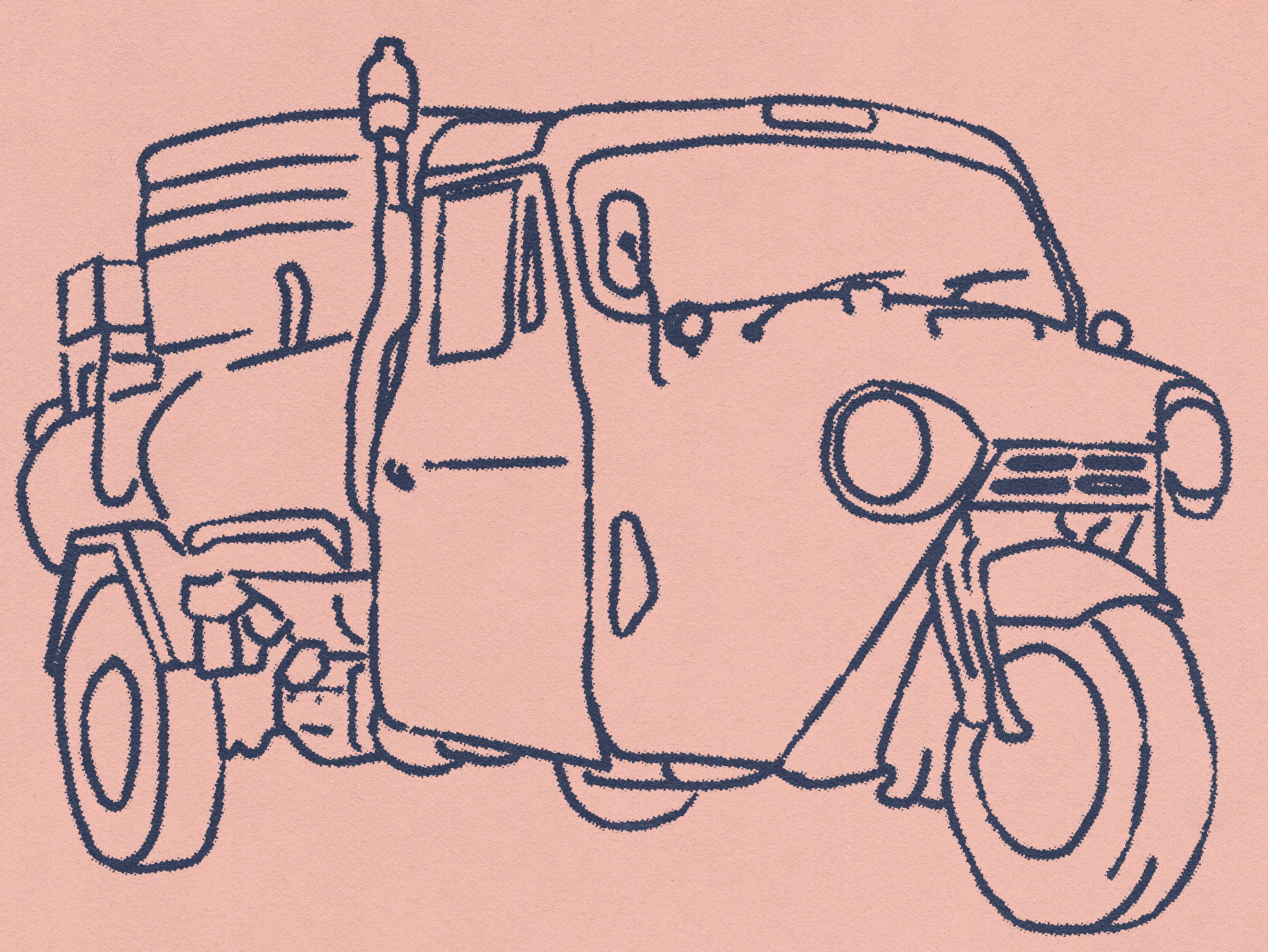
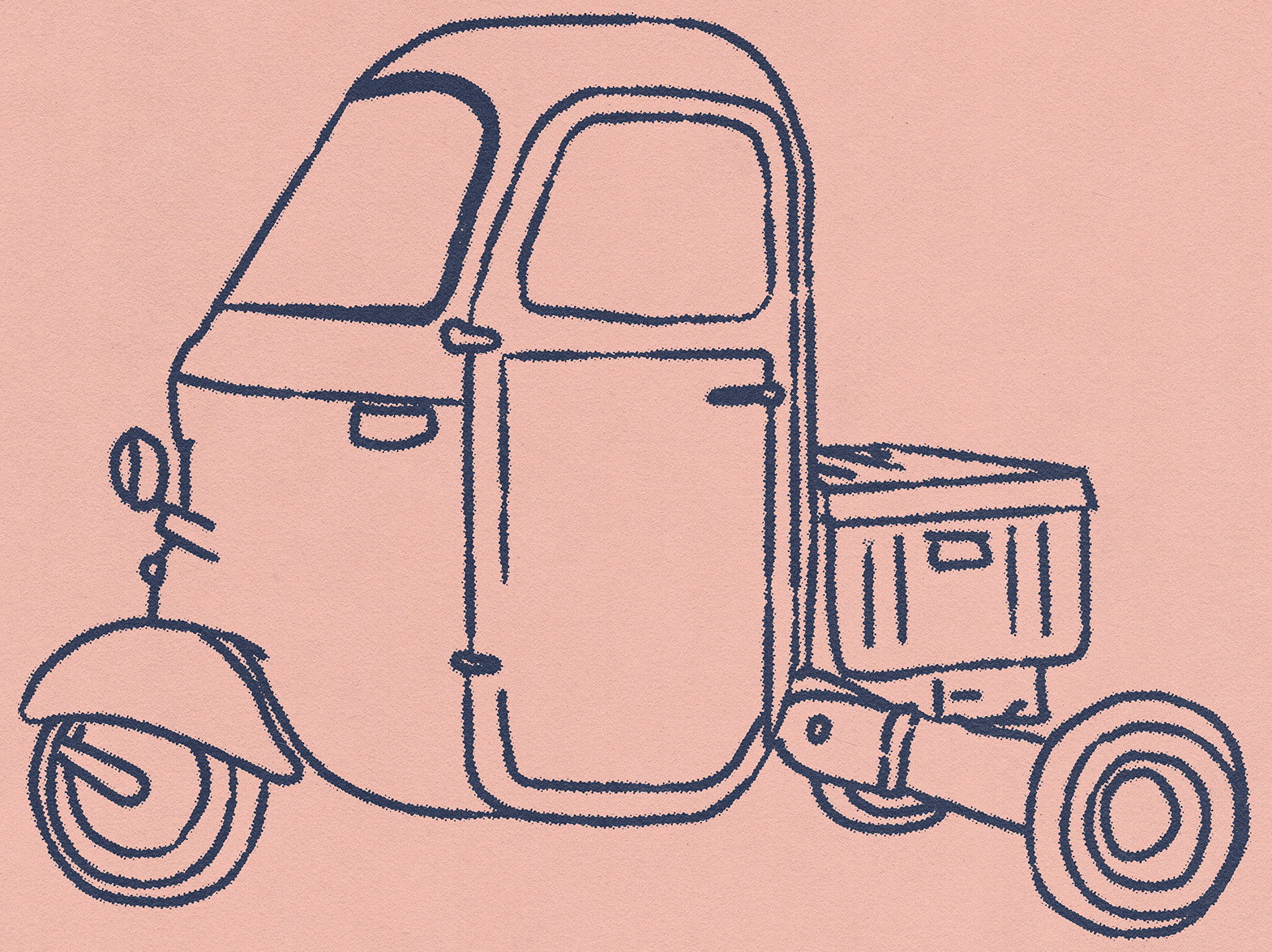
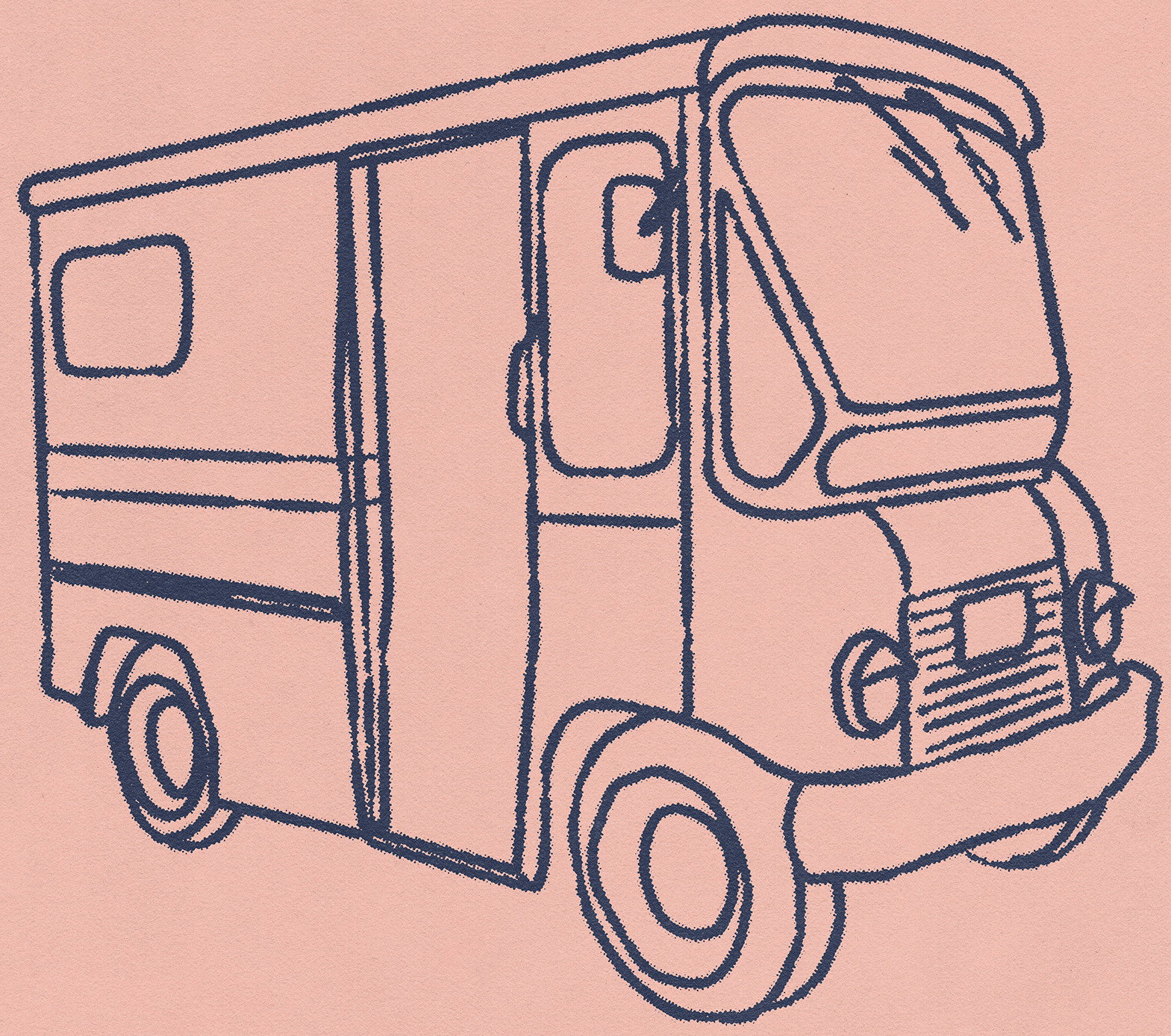
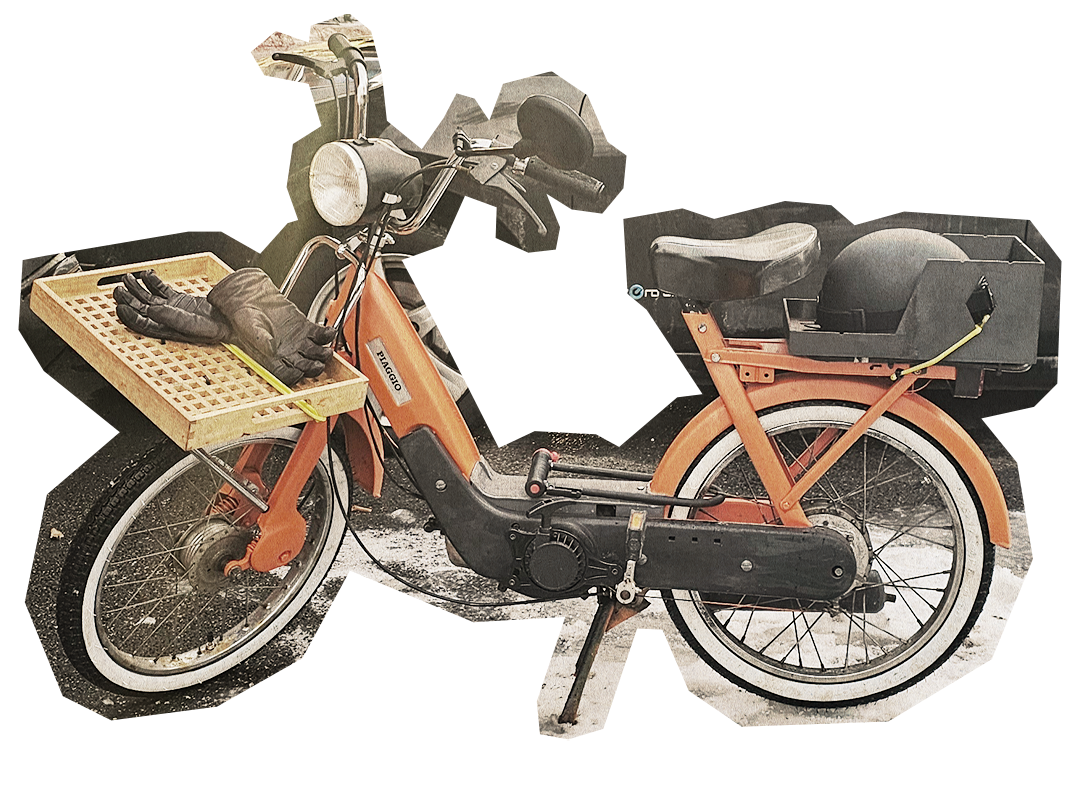
Personal motorized vehicles of the "car"-variety are not a concept that has ever taken off for the general public on the tetra. Instead bikes and mopeds, both factory-made and modified, are very common.
Obviously the 1% probably has access to some kind of personal mode of transportation, but nothing that the average joe would've ever been in or have much knowledge about. Utilitarian vehicles, on the other hand, such as industrial three-wheelers and such, are common for industrial shipments, mail delivery, public transport and the like. Owning a personal car is generally thought of the way we think of private jets: unattainable, unnecessary, kinda cringe.
There are train tracks, but most passenger trains are out of commission (mostly due to the fact that most people don’t really travel unless they need to).
The absolute majority of active trains are owned by VEGAB, and are used to ship Vilhälmite from the mines to the factories/major cities etc. The same trains will ship workers to and from their hometowns (small reminder: Vilhälmite is, by all accounts, radioactive).
There is no long-distance aerial travel. Autogyros exist, but are rare, only work for shorter distances, and are mostly used by police and TTV.
Aesthetics
Geographically, imagine two different lovechildren:
one of Sweden, Italy and Berlin
and another of Nevada and Mexico
Now let those lovechildren have a lovechild. That's the Tetra.
Make sense?
It's European at its core, but not the “folk-dresses and blonde girls”-europe, more of the “old meets new” and "contradicting architecture"-europe. And with a hefty dose of long-empty-stretches-of-road-through-dry-landscapes of the Americas.
To make things a little more complicated though, the Tetra is very diverse. This can be chalked up to the fact that most people don’t travel unless they have to, meaning traditions and aesthetics can be quite heavily localized, with their own music, TV-channels, fashion sense etc. This means that despite what I said above, there’s certainly a “folk-dresses and blonde girls” area somewhere on the tetra, if you look hard enough.
As for general aesthetic guidelines, I will point you to these sources of inspiration:
I've already noted the use of the X icon, but for this section I want to double down:
The reference images in this section are NOT covered by this document’s Creative Commons license. They belong to their respective creators and are included for reference purposes only. Do not reuse, redistribute or sell them.
Think a little bit of Simon Stålenhag
meets a LARGE bit of Brazil (1985)
with a pinch of Severance,
a very very (VERY) light touch of steampunk (can't emphasize enough that it’s a LIGHT touch. This is not a steampunk world),
and a slightly heavier touch of cassette futurism (as much as I hate that term).
Throw a little bit of Borderlands in there too.
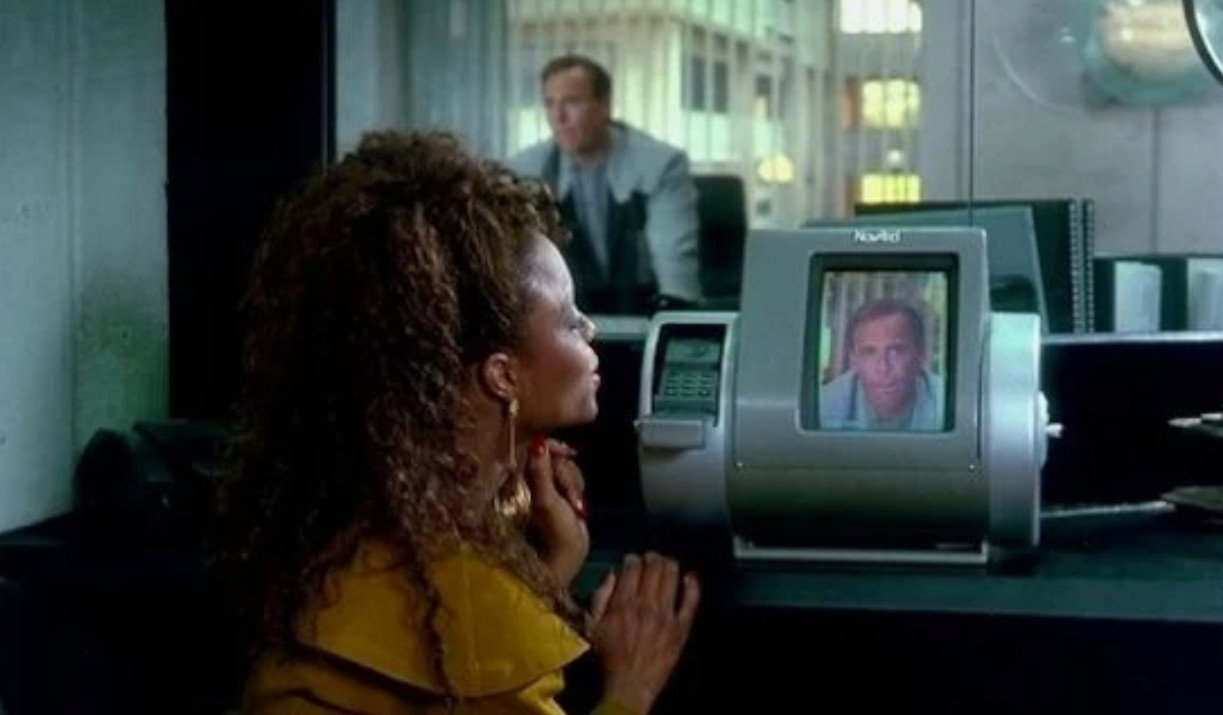
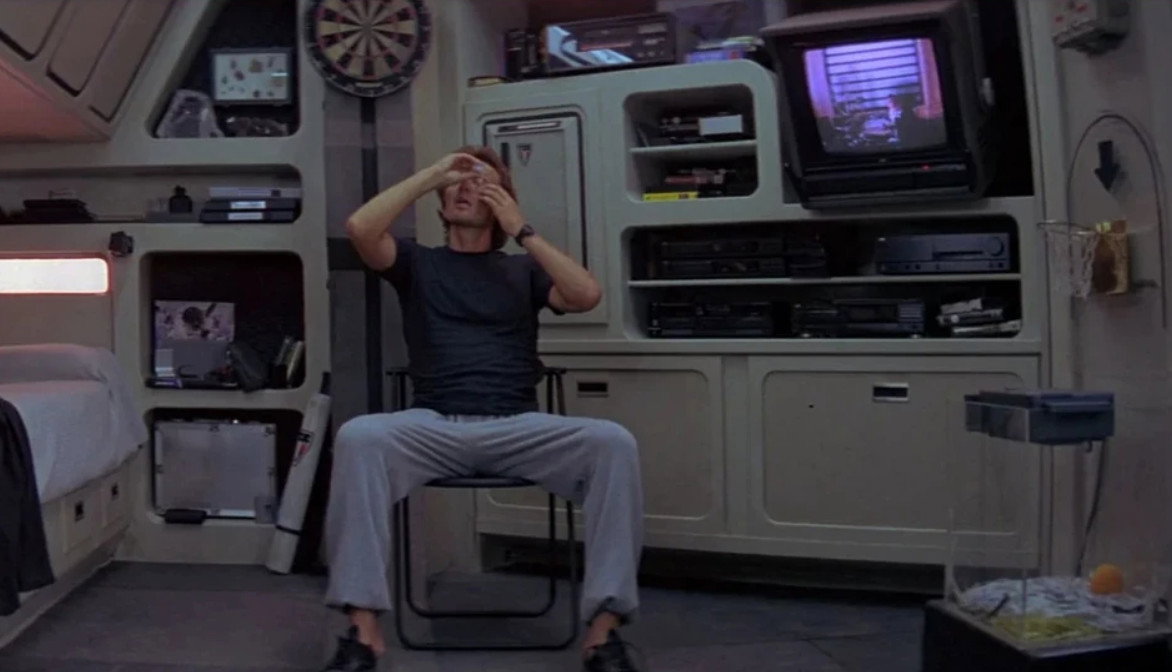
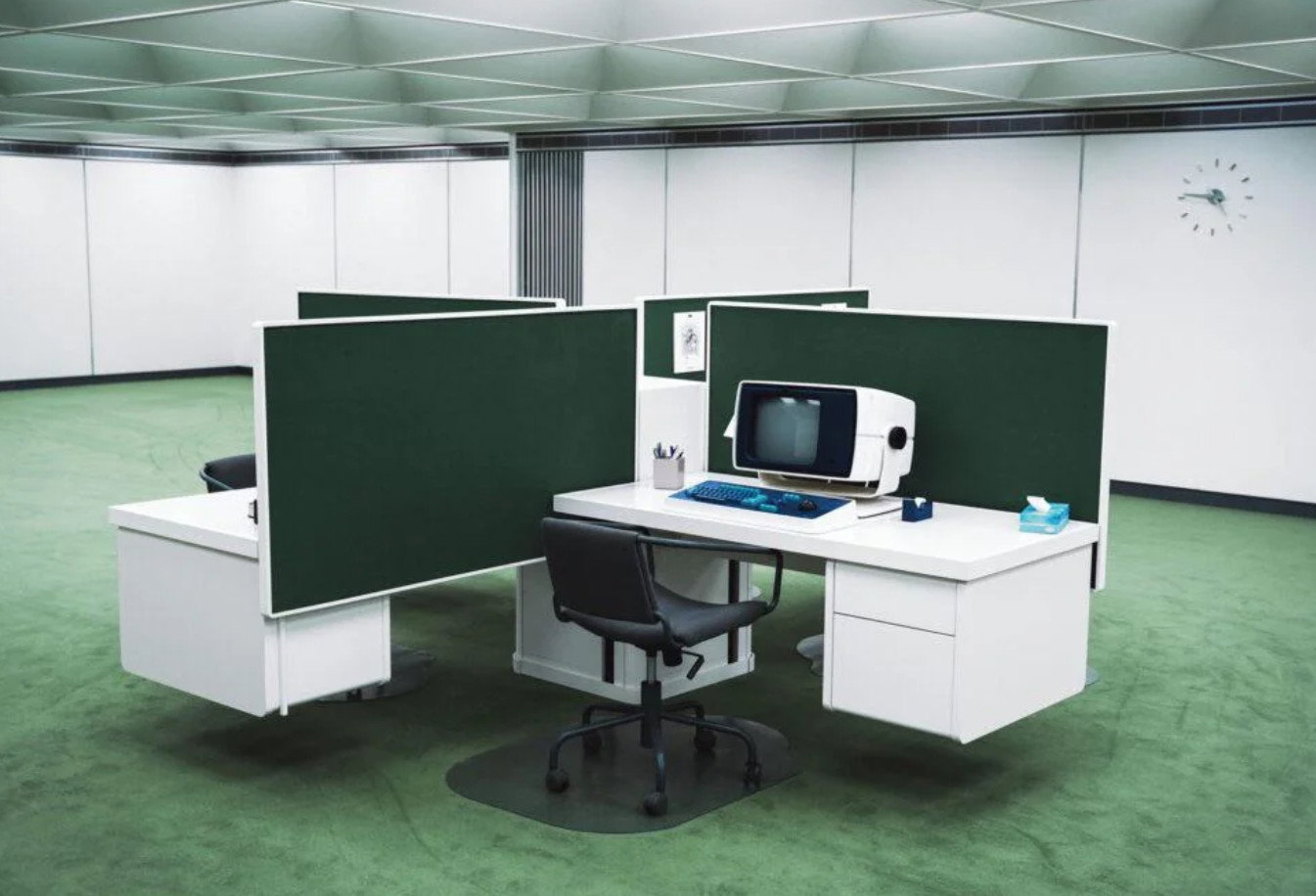
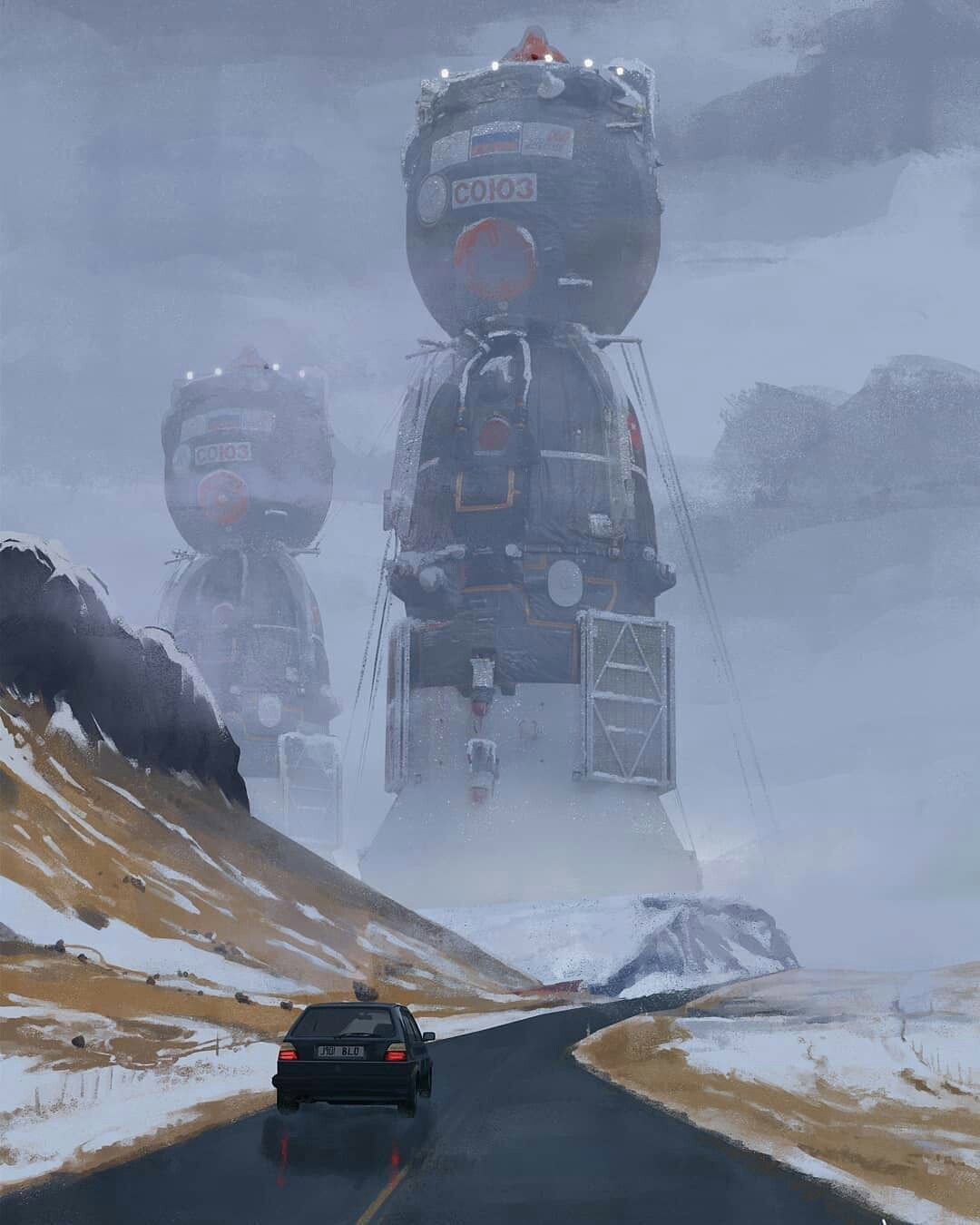
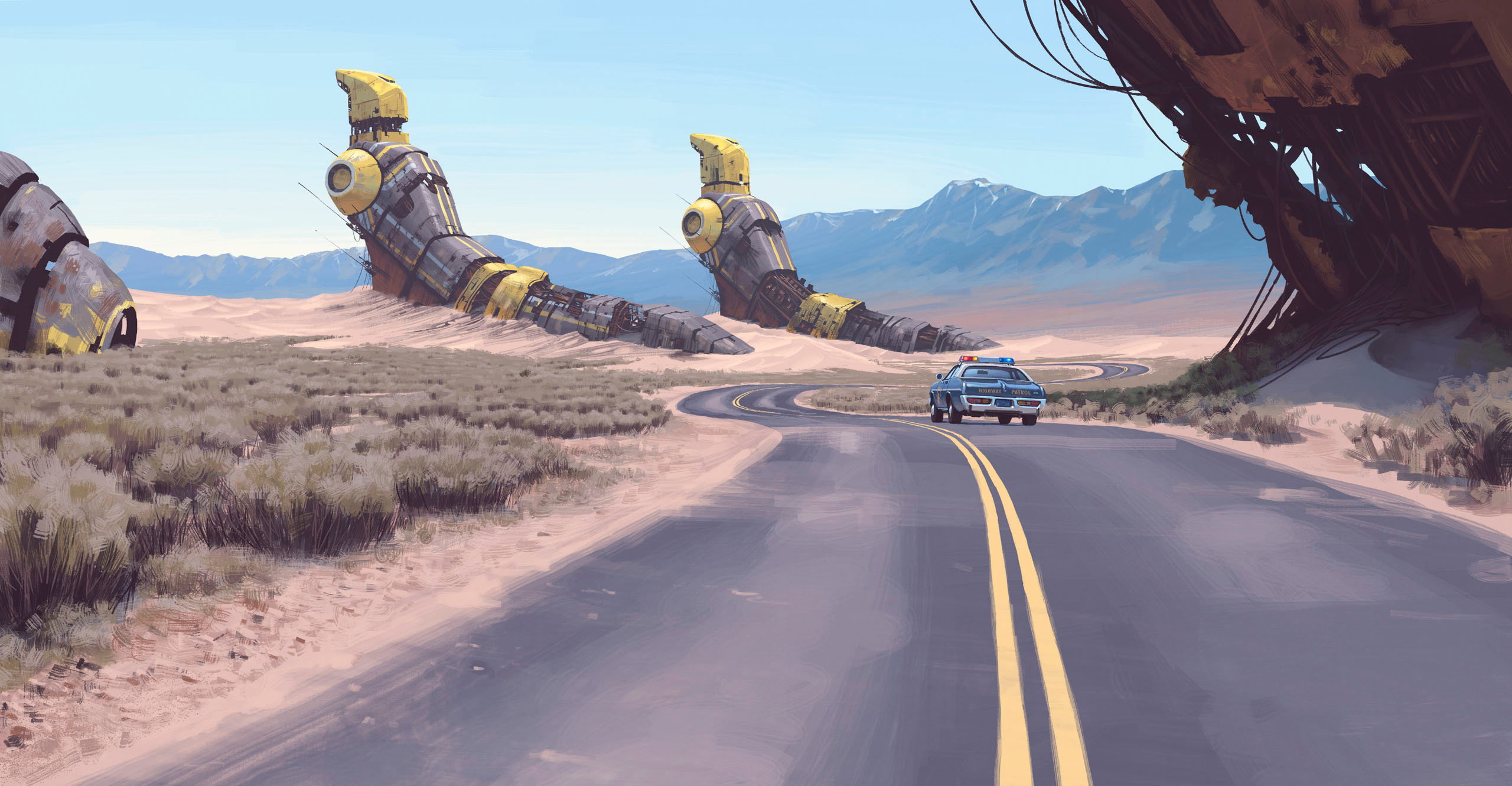
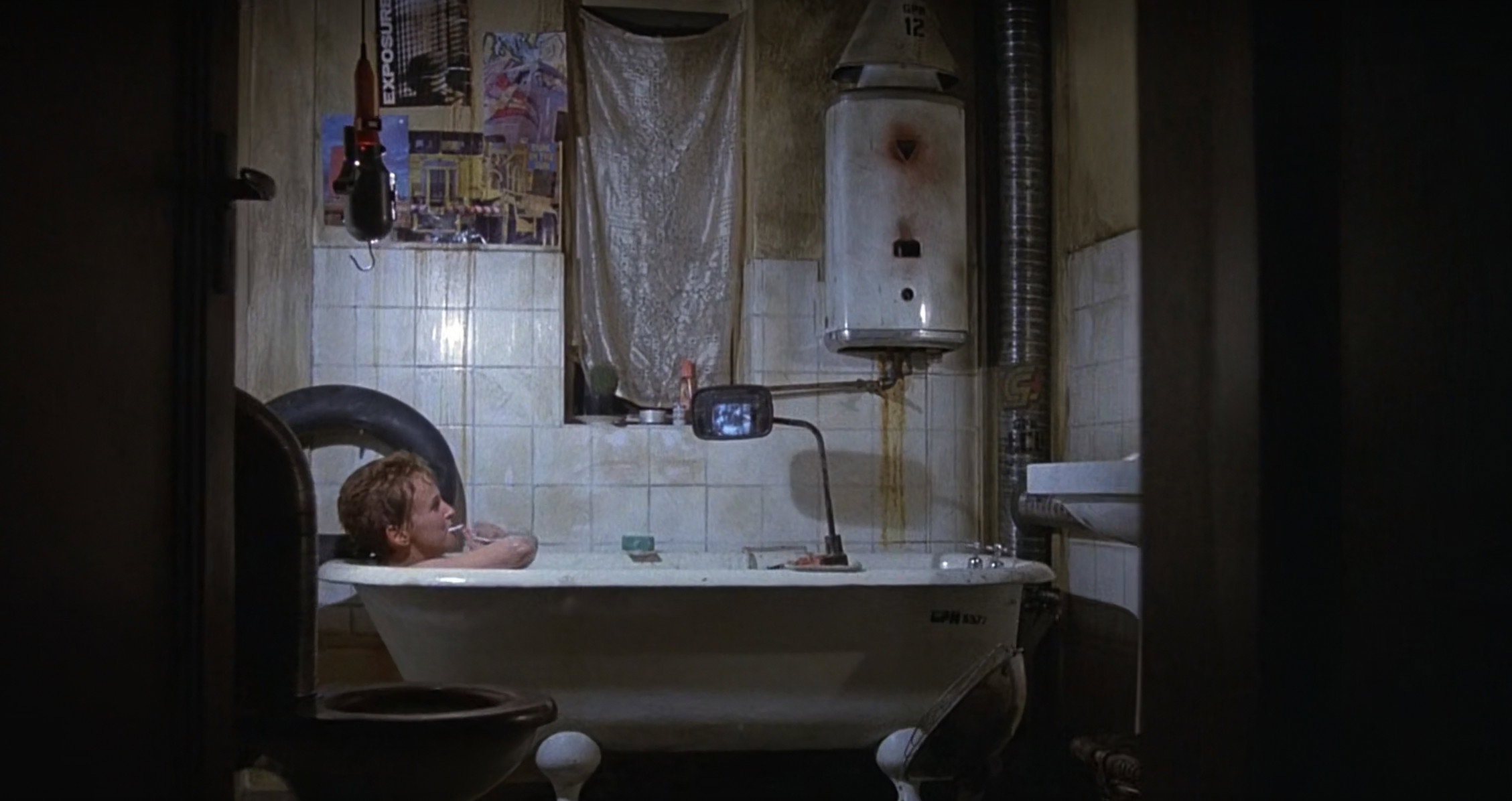
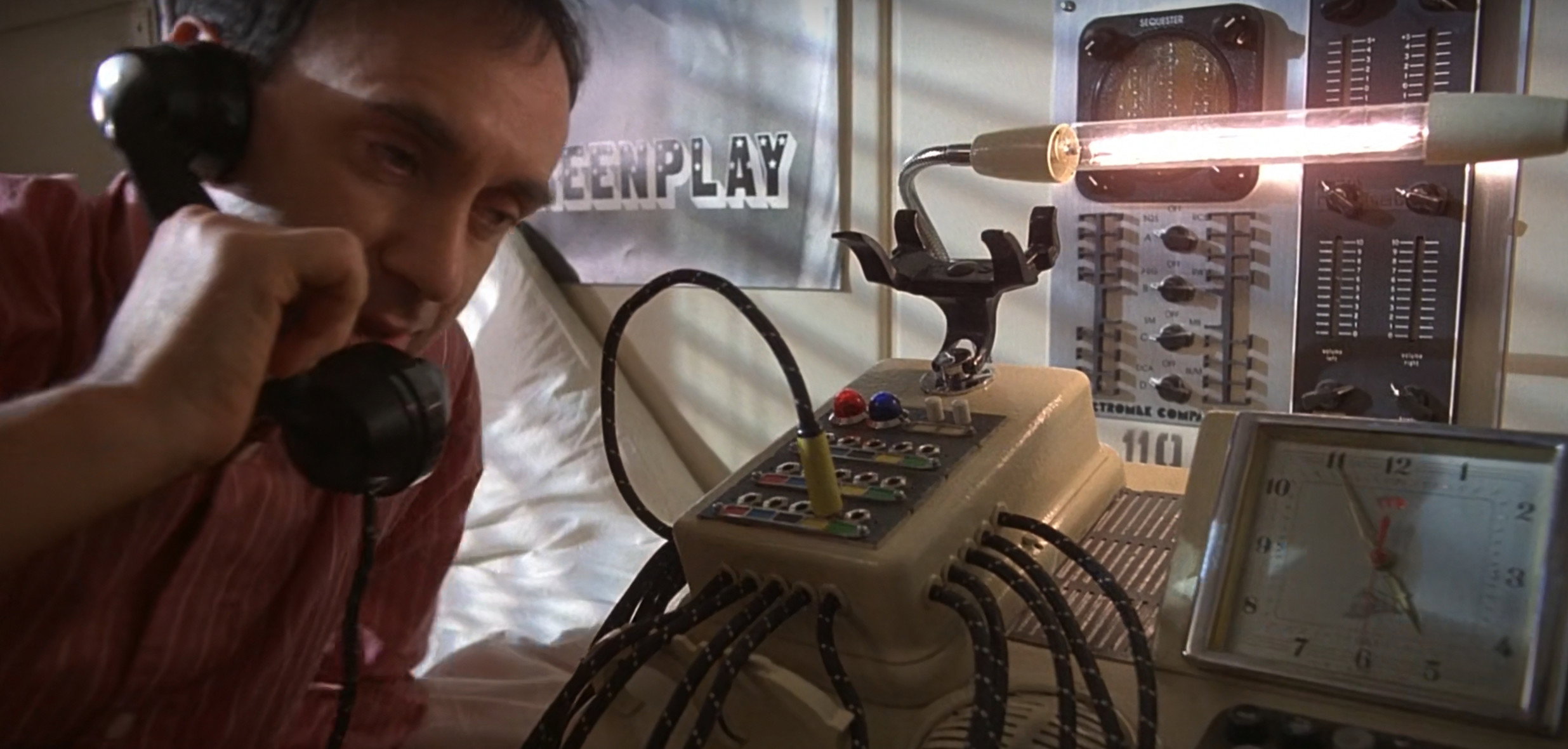
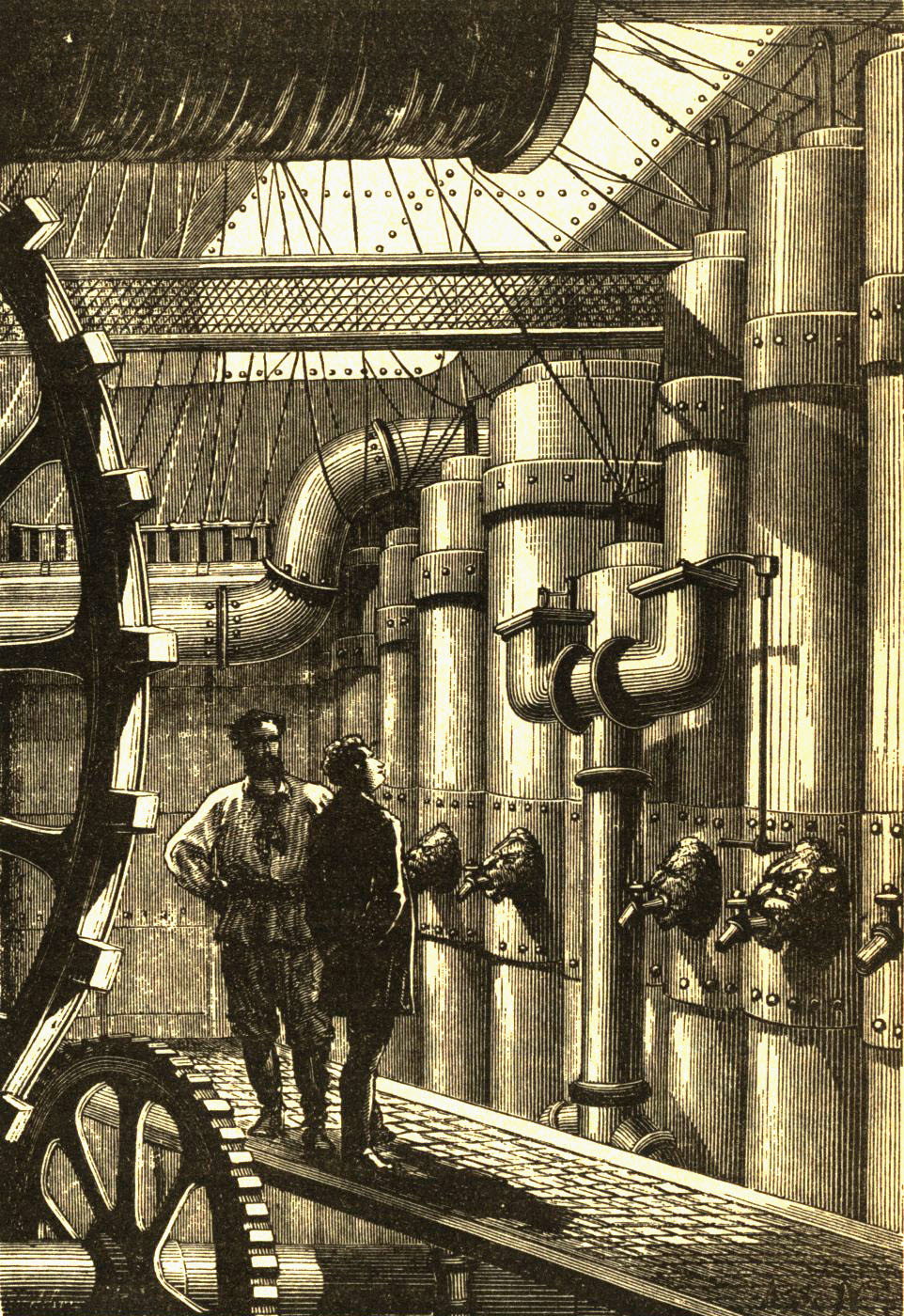
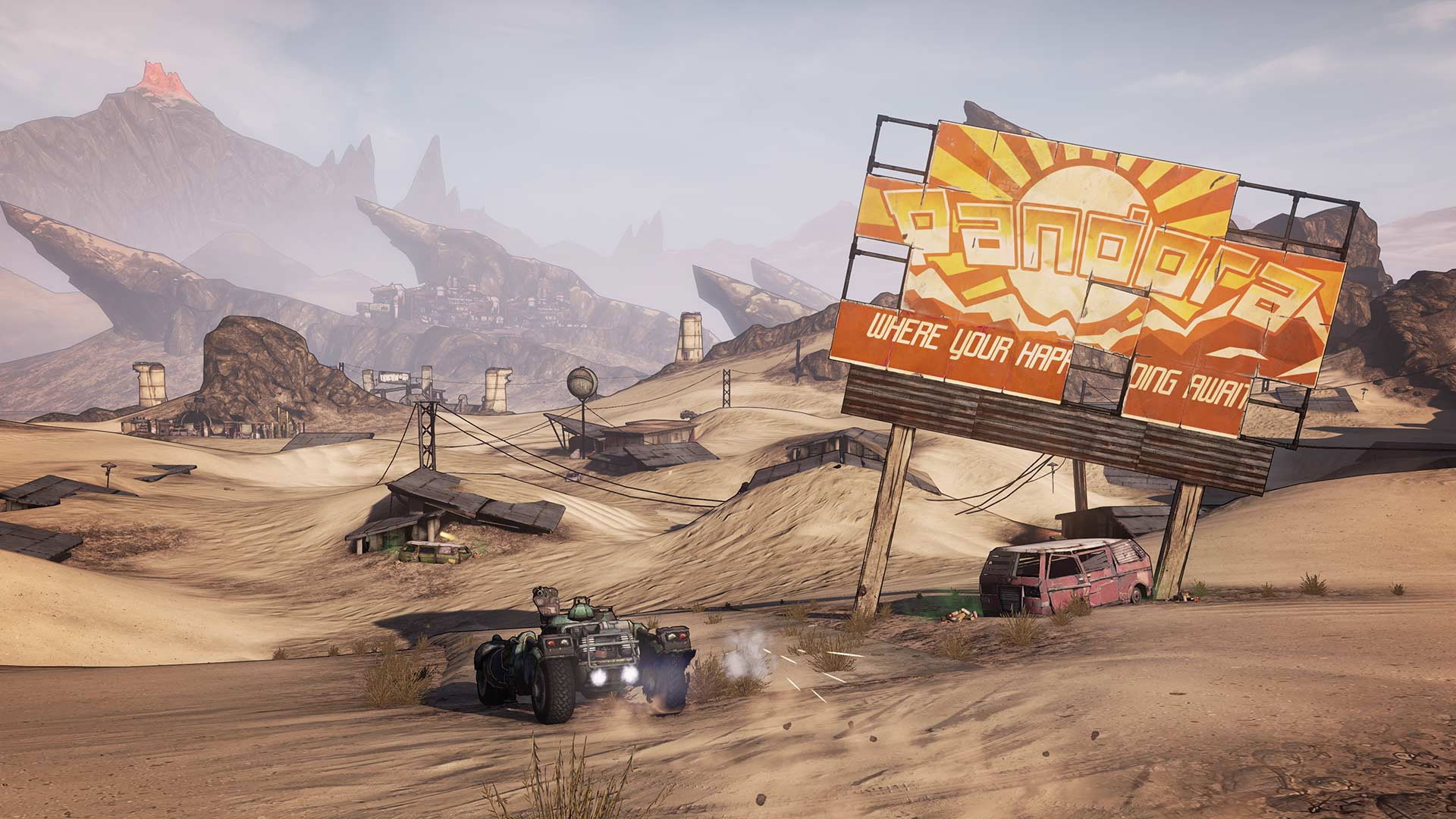
In terms of earthly style and tech sensibilities, think somewhere between the 1950s and 1990s.
Bits and bobs
I’m going to try and keep this pretty brief, but here are a few things I didn’t know where else to put, as well as some thoughts on stuff that’s not been defined or that I currently don’t have a strict answer to.
Achronia Syndrome
(or “Scrambled Brains”)
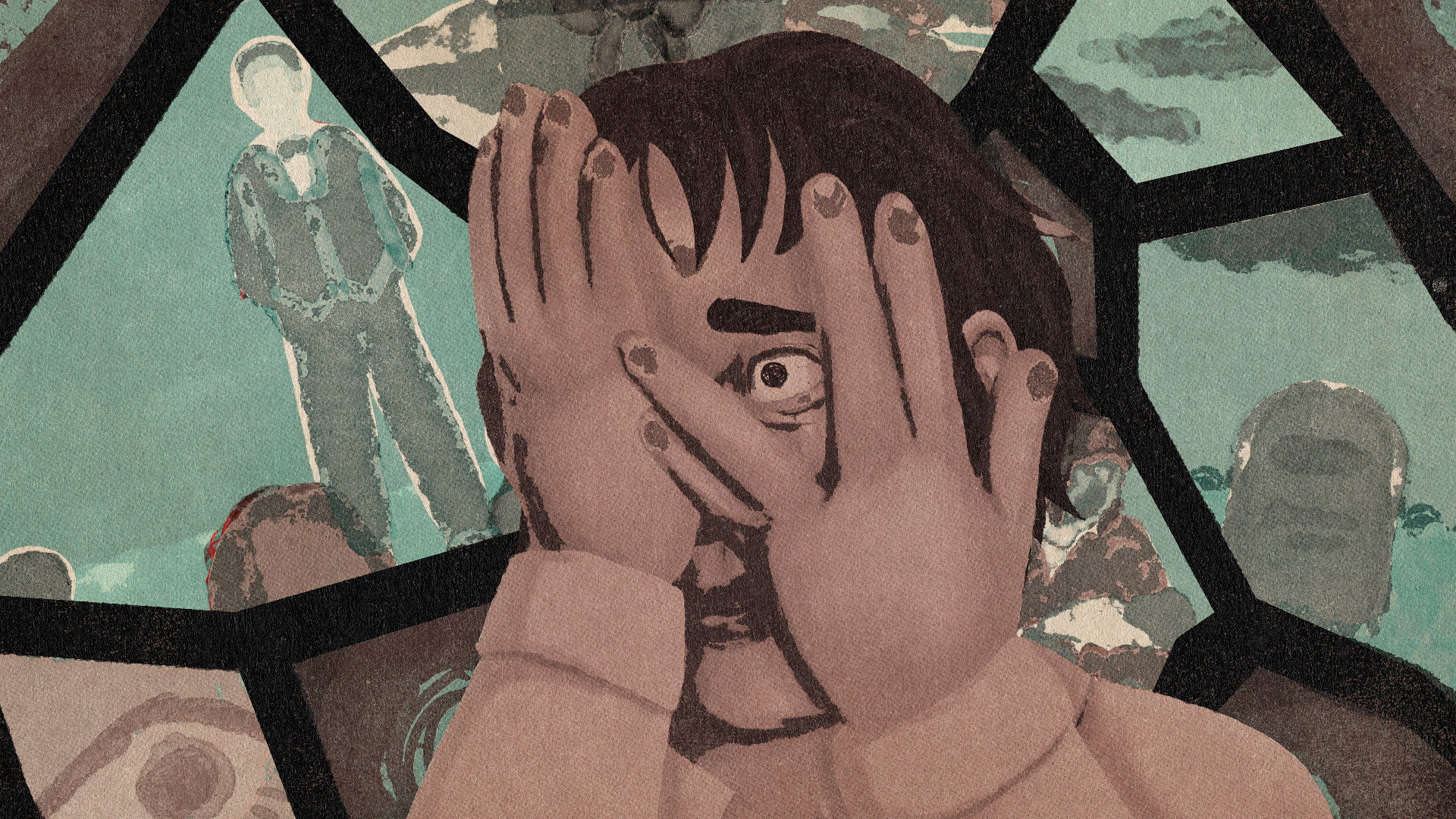
This is a quite dense concept that I will do my best to explain, but truth be told: it only makes sense to even myself about half the time. But I think it narratively benefits from how confusing it can get, so I wouldn't worry too much about it. If you think you get it: good. Don’t try to ensure you really got it “right”. Roll with it. I'm sure you'll come up with cooler stuff than I could with it.
Sometimes, for reasons mostly unknown, some people get their brain "scrambled" (officially known as Achronia Syndrome). Like with many other ailments, many believe this to be a side effect of Vilhälmite radiation. Others think it’s some sort of mutation or side effect of (or even allergic reaction to) Väägi. Others claim it’s the effect, or lack, of The Fifth. Regardless of its origin, getting Achronia isn’t a great time, and it goes something like this:
Say a vision flashes before your eyes: your kid crashing his bike. Some time later, it happens exactly like you saw it. This could be a weird fluke, it could mean you’re a Välder, or it could mean you have Achronia.
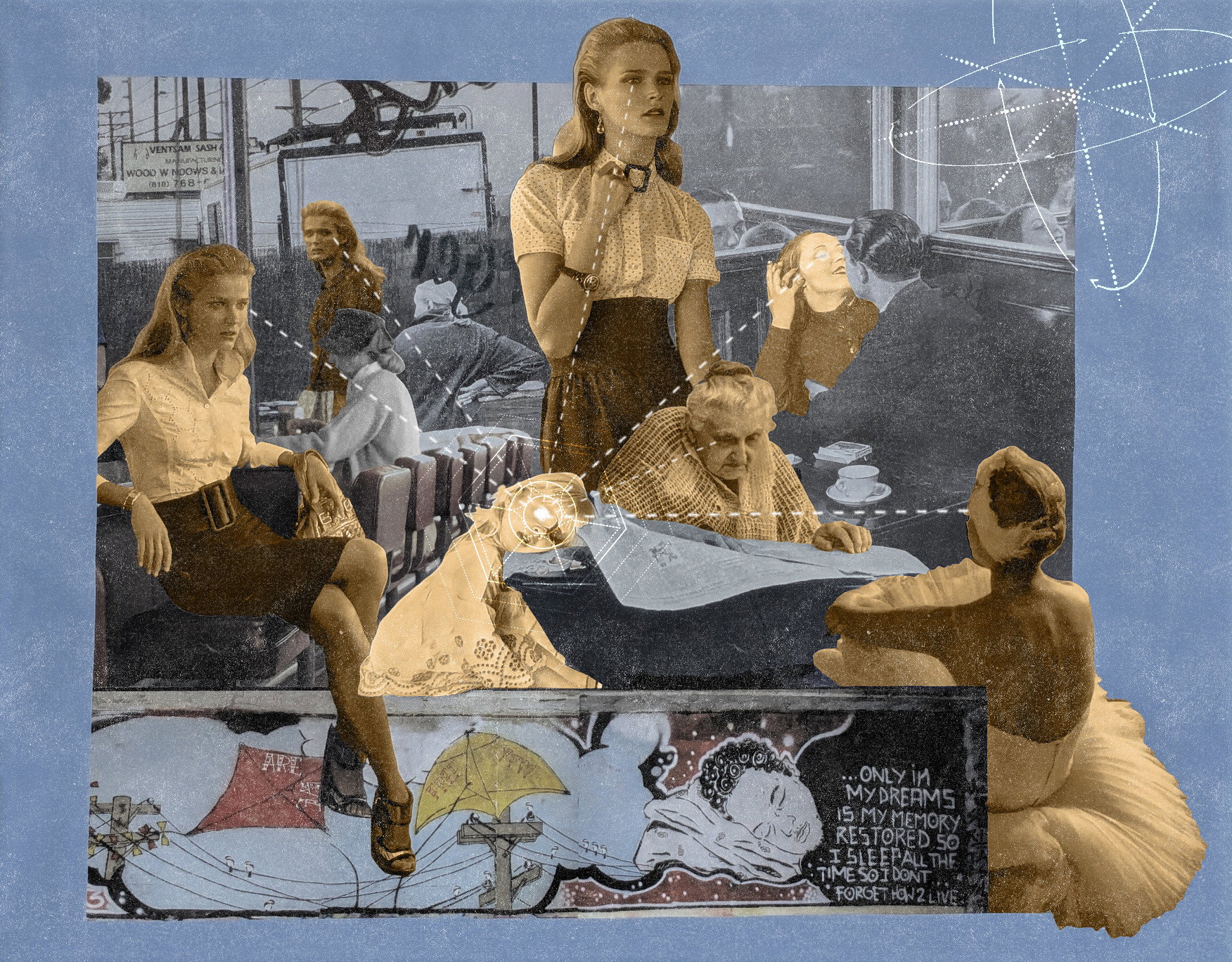
Achronia can be thought of like a sort of supercharged Alzheimer’s, except instead of disappearing, your memories are being rearranged. Sometimes slowly, one at a time over the course of years, sometimes all at once in the span of a week.
Say you suddenly recall your wedding happening before your first day of school. You now remember being a six-year-old with a memory of a wedding that hadn’t happened yet. By the same logic, a memory you form in the future might end up before today, meaning you could remember something that hasn’t happened yet.
Telling this apart from a Välder-vision can be tricky.
Välder-Visions
Some Välders receive visions of the future. These are quite different from the premonitions of someone with Achronia, but only in the sense that the outcome of the vision would differ.
Välder-visions are metaphorical, Achronia memories are literal.
Your buddy calls you up and says “I just had a vision of you exploding”.
If they have Achronia: sorry bud, you’re gonna explode.
If they’re a Välder: you might be about to have an emotional breakdown, or become super famous, or something else entirely. But you won’t literally explode.
Forgotten eras of history
There are large chunks of history missing. I’m not going to outline a full timeline, partly because I don’t have a complete timeline, and partly because this document is long enough as it is, but just to give an example in earth years, history might look like this:
Year 0 to Year 500 is all good.
Year 501 to 523 are missing from all history books.
From then on, things are well documented up until 1363. This gap is short and history picks up again at 1365. A larger gap happens in 1650, and goes all the way to 1733.
So on and so forth.
No one knows why. Sometimes something from those time periods is discovered. Sometimes it’s an obvious hoax. Other times, who's to say?
Scholars dedicate their entire lives to studying this phenomenon.
Whether these historical gaps, Achronia Syndrome, The Fifth and Neder are somehow connected is anyone’s guess.
Specifics
In this document, I've focused a lot on the broader aspects of how the world fits together, meaning I have not covered as much of the Specifics™ that make a world feel lived-in as I would’ve wanted.
I'm hoping to come back to these aspects of the world in future updates to this document or in expansions. Until then, they're yours to flesh out.
Below are some examples of stuff I would try to figure out:
Historical figures
Celebrities (theater actors, musicians, etc)
TTV news anchors
Members of the Political Council (though most are “faceless suits”, at least a few of them must be known to the public, as well as their public-facing spokesperson)
Tech companies
Fashion labels
Soda companies, bubble gum wrapper designs, alcoholic beverages
Logos and slogans for all
Police
Firefighters
Search and rescue
Names, three-letter-abbreviations and internal structure for all
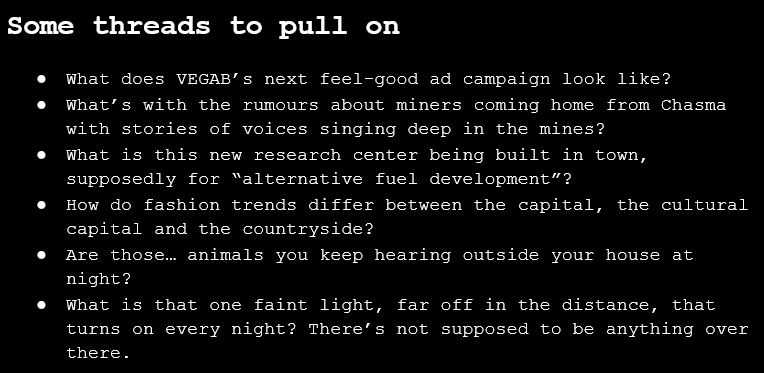
Fashion, and how it differs between Asterholm, Mölstadt, the countryside and the various other regions
Cultural customs and local traditions
Slang and sayings
Towns
Landmarks
Bars and venues
People
Brands & companies
Government and agencies:
Culture:
Culture:
Fauna
I’m not sure how I wanna deal with animals, and I'm open to suggestions. SOME earthly animals should absolutely be there. Not sure what sort of animals though. And are they alien-looking in some way? I’m leaning no, as I don't want this world to feel too “out there” in that regard, but again: I'm open to suggestions. A deer with three antlers could be cool.
Size of the world, cities, bodies of water, etc
As mentioned earlier, Innangaard is roughly the size of the earth. Beyond that, I like the idea of not specifying the scale too much, so that there’s wiggle room to adapt the world to the stories you want to tell within it.
The main cities and landmarks (the 1%, Asterholm, Mölstadt and Fjellvik) are covered in the Class society section. Their position has not been exactly established as of V1 of this document, but is something I intend to return to. I do however also fear that being too specific may limit the world and the stories that can be told within it. I might limit myself to the main cities and the land masses/bodies of water, and leave the rest unsaid. We will have to see.
Final notes
As stated in the beginning, much of this document is subject to change. I intend to return to this document at some point, provided there is interest and I find the time, to dig into some of the aspects that are currently unclear. Whether you treat future additions (or anything in this document currently) as canon or not is your call.
Now, the current state of the document leaves quite a few unanswered questions.
What’s up with Perata? Neder? Who or what is The Fifth?
And part of that is simply because I haven’t figured it all out.
But part of it is intentional.
Over the years I’ve played quite a few TTRPGs, both as a player and as a DM, and I’ve found that the sense of wonder and mystery (i.e. the best part of TTRPGs imo) is somewhat lost when you’re in the role of DM.
It’s like the classic horror movie trope: the monster the viewer imagines is way scarier than anything you could put on screen.
Hence I'd like to keep some of that "mystery" alive, even for the DMs out there. You don't need to know every single thing before you start. Maybe you'll come up with something. Maybe you won't. Maybe your players will lead you to a reveal much cooler than anything you could’ve planned. Who knows!
As mentioned; some of the lingering questions will (hopefully) be answered in future updates. Some won't.
If you create something in this world, and you find yourself running up against one of these walls: the world is yours. Put whatever you want there. Or work around it until there's an update to this document, if you want something more "canonical".
But again: nothing is canon. everything is canon.
The tetra is meant to be intriguing, inspiring and most of all fun. I can not emphasise the fun-part enough.
I think a good reference point for creating anything in this world is to think less George R.R. Martin, and more Douglas Adams.
A world that, while reflecting earth in many ways, is still foreign enough to function as an escape.
It all started in my dreams. But I'm leaving the rest up to you.
*
********
License
The Tetra is released under the Creative Commons Attribution-NonCommercial license. In plain words: you can use it however you want, change it, build on it, rip it apart, whatever. Just credit where it came from (a link to this webpage is enough), and don’t make money off it without asking me first.
The non-commercial rule is there to fend off corporations and grifters. if you're an independent artist selling some cool shit, I won't care. If you’re unsure whether something is okay, email jeffiotcontact@gmail.com with the subject “Tetra Licensing” and we’ll work it out.
There is a channel for discussing the Tetra and sharing whatever you make on my Discord server:
https://discord.gg/AVGUegvbdP
Credits
A huge thank you to the artists who let me use their artwork in this document:
There is probably stuff i've forgotten, layout issues, spelling mistakes and other stuff that i'll have to fix in future updates, but otherwise: that should be all.
thank you for reading.
/jeff

All the artwork can be found here:
some browsers get weird formatting errors. try another if needed!